The Houses at Upper End, Shipton: A History

Aerial view of Upper End, 2020, (Diane Melvin)

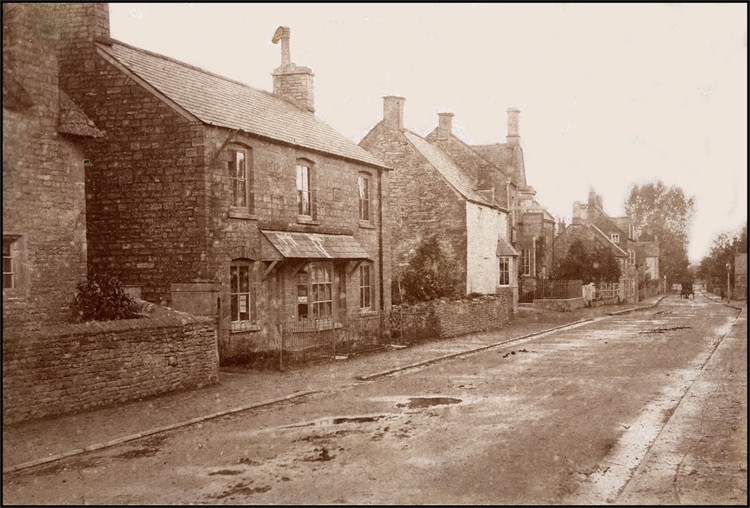
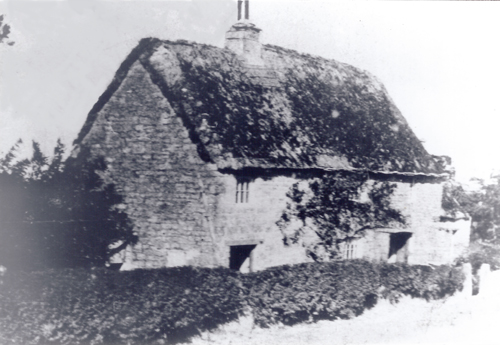
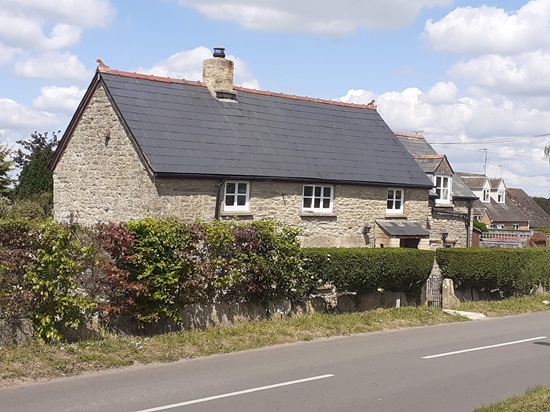
This essay by Diane Melvin explores the history of six cottages at Upper End, Shipton, from 1797 to the present day.

Diane traces the  ownership, occupancy, and development of these cottages, while reflecting broader changes in the parish.

Research sources include deeds, census records, maps, and local memories.

This research came about after Diane, who is an enthusiastic genealogist and teacher—began investigating her own cottage during summer breaks. Discovering links among the original six houses, the project expanded into a wider study. It culminated in this ‘Little Houses’ report, created as part of a university assignment.

A fully documented version of this essay available in the WLHS  archive which references all sources used. This extended version can be supplied in digital form to anyone interested. [ Contact us here >>> ]

Sculptural Curiosities in Milton-under-Wychwood: Library Exhibition

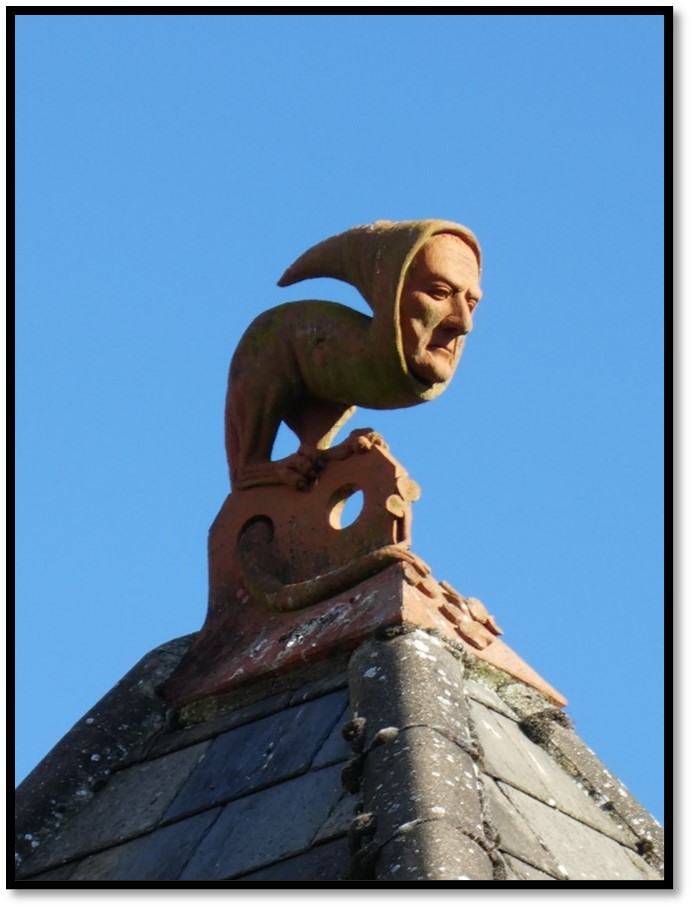
Terracotta sculpture of a hooded man with claw feet, Forest Gate, Frog Lane c. 1880-90

An unusual feature of Milton is the scattering of small pieces of sculpture which adorn a number of properties throughout the village.

Our latest exbition in the Wychwoods library in Milton celebrates many of these fascinating and unusual adornments.

The exhibition is on until mid-October, and coincides with the release of updated research on these curiosities.

Part of the exhibition – on until mid October

About the Milton Sculptures

We are never going to rival Florence in our sculptural adornment, but these little sculptural fragments illustrate a sometimes-overlooked theme in the history of the village. Almost all of these carvings have been relocated from unknown original settings.

Usually, sculptures in small rural villages in the Cotswolds and elsewhere, are to be found on and within the local parish church in the form of architectural ornament or funerary monuments. However, almost all the ones in this exhibition are scattered among the domestic buildings of Milton. That is unusual.

Most of these survivors are a legacy of the presence of Alfred Groves and Sons in the village. Many are probably salvaged features from the demolition or restoration of other buildings in the region by Groves, or sample pieces undertaken by apprentices.

There are other pieces of sculpture and ad hoc bits of carving inside a few properties within the village, which are not on public view, but are also a legacy of the presence of masons in the village.

Updated Research

The updated research on these curiosities , developed from the original 2020 publication, is available to read and download here:

Forest Gate – The Story of a Milton House

The house now known as Forest Gate, on Frog Lane, Milton-under-Wychwood is one of the most distinctive properties in the Wychwoods, with the added mystery of an unusual terracotta figure decorating its roof line.

Here is new research – available here to download as a PDF – which uncovers the fascinating history of this house of distinctive architectural style, and the stories around the occupants of the house over time.

Click/tap the link to read online, or click/tap the Download button to store a copy

Frogmore House, street facade, 2025

WLHS at Milton Fete

The WLHS made its presence known at the Milton Fete this July 12th. We had two boards of photographs on display, mostly focussing on Milton subjects, plus other “albums” of historic photos of Milton. We also had our stock of Wychwoods History Journals and other publications available for purchase.

Images from Milton under Wychwood Fete – including the star attraction Chitty Chitty Bang Bang

Our location on the Green was a good one, and, despite the relentless sun and heat, we had a good number of visitors to the stand; both browsers and those with questions. We had some interesting conversations. For example, several newcomers to Milton asked about the history of their recently acquired houses. It was pleasing to be able to show historic photos of some of them on our website.

Letter from New Zealand to the People of the Wychwoods

I am pleased to share this letter from Glenda Lewis, a descendant of Wychwoods emigrants to New Zealand. Glenda is numbered among many such descendants who are drawn to the Wychwoods from overseas, specifically to connect with their family story.

Over the years the society has helped with enquiries from a distance, but I was pleased and delighted to meet a descendent of Wychwoods emigrants in person, and quite out of the blue,  on  2nd September 2024 outside the Wychwoods Library.

My meeting with Glenda was particularly fortuitous as I was in the midst of research about Wychwood emigrants to New Zealand in the 1870s, as part of our commemoration of the 150th Anniversary of the Cospatrick tragedy.

 Glenda told me of her Wychwood ancestors.  I told her about our research, and we began a correspondence about our shared interest.

On the 18th November she wrote to me with this moving tribute to the Wychwood emigrants, a letter she wishes to share with all of us in the Wychwood villages.


 To the people of Shipton, Milton and Ascott under Wychwood
From Glenda Lewis, Wellington, New Zealand: 18 November, 2024

What romantic ideas the name Wychwood conjured when I first learnt that my great grandfather Joseph Pratley came from Milton-u-W.  He and my great grandmother, Jane Watts of Lineham, came to New Zealand on separate ships in 1874.  I don’t know if they had already formed a relationship, but they soon married and settled in Waipawa along with a couple of his brothers, and one of hers, I think.  Whenever I drive north to see my daughter in Napier, I stop at the cemetery to pay tribute to Jane (my mother’s mother’s mother).  She died at age 66, after an emergency operation on the kitchen table.  By that stage, Joseph was ‘seeing’ another woman, referred to scathingly by my grandmother as ‘Jesse in white boots’. 

In 2018 I spent 6 weeks in Shipton under Wychwood, courtesy of a Churchill Trust Fellowship.  I noted that Churchill was born on 30 November 1874. I wanted to see the place Jane and Joseph came from.  But the past is irrecoverable, and I could not relate the wealthy communities I saw with how things must have been back then.  And I was struck by the fact that I couldn’t see anyone working the land, and hardly any farm animals.   I learnt about the Ascott Martyrs, and the involvement of the Pratley women.  Maybe that’s where my grandmother and mother got their grit from.

When I came across the Shipton memorial to the villagers who had the misfortune to voyage out on the Cospatrick, I realised what a close call I’d had.  It could well have been Joseph and Jane on that ship.  Jane would not have known about it, as she left on the Lady Jocelyn, on 3 November.  I learnt in an article on the tragedy in the NZ Listener (26 October) that many ships never made it.  How brave they had to be to leave everything behind, risk their lives and face who knew what in this far off land.

Although they had plenty to eat when they got here, life was hard, and very physical.  My grandparents, Arthur and Ruth (one of Jane’s daughters) sold their teashop in Waipawa, and broke in 60 acres 35kms further south, in the still tiny settlement of Norsewood.  The Scandinavians who’d come en masse in the 1870s for the same reasons as the British, had felled the mighty forest.  It took my grandfather and his faithful horse Doris, a long time to pull out all the stumps.  My grandmother had to climb down the steep bank to the river to fetch water, and they raised their first three babies in a couple of small rooms which now comprise our tool shed and outside toilet.

My three older sisters and I now own the old farmhouse and an acre around it.  We spend long weekends there about ten times a year.  We grow vegetables and have a small orchard.  Being close to the Ruahine hills, the climate is quite cool and wet, so only walnuts, quince and apple trees do well.

We have often imagined our grandparents listening to Churchill’s wartime speeches on the old radio.  They were very isolated at the farm, and never travelled much further than the Methodist Church in Norsewood.  It was always cold inside, shaded outside by dark green macrocarpas.  Their views were strict Victorian.  I assume Ruth inherited her bitter hatred of people with money, of Catholics, from Jane, who was ‘in service’ before she left Lineham and fell under the spell of the charismatic Methodist preachers.  Ruth and my mother scoffed at people with culture and education, which was somehow corrupting.  (They always said teachers and nurses made bad housekeepers) They valued their independence, and though they never had much money, they always had good food and were able to feed the itinerant men looking for work during the Great Depression.   A large side of bacon always hung high in the pine trees – out of reach of the blowflies – next to the henhouse.    

Jane and Joseph’s descendants have prospered in a small way.  By world standards we are rich and want for nothing. 

I wonder how she and Joseph felt about being forced by circumstance to leave the home country, never to return.  Even though I was born in New Zealand, when I go to England it feels more like home, and culturally, I guess it is. We idealise English culture and tradition, and prefer the houses, the trees, the flowers.  However, we much prefer our egalitarian society, and less reserved natures. I know where my loyalties lie when the All Blacks play!

Tomorrow is an important day in New Zealand history.  Māori are marching in great numbers from the top of the North Island and bottom of the South Island to meet at Parliament, to object to moves to renegotiate the Treaty of Waitangi (with the Crown).  Our relationship, and emotions about our co-existence and land ownership are still not resolved. 

I send greetings to all the villagers, and the surviving relatives of the poor people lost on the Cospatrick.  I hope to visit the Wychwoods again.

Arohanui,

Glenda Lewis

P.S.

I offer you this (to me) very affecting poem by Minnie Louise Haskins, which King George V1 broadcast in 1939, and was framed by my grandparents. It hung on the farmhouse kitchen wall…I once tried to read it to my fellow writing students, but choked and couldn’t utter a single word.

And I said to the man who stood at the gate of the year:

‘Give me a light that I may tread safely into the unknown.’

And he replied:

‘Go out into the darkness and put your hand into the Hand of God. That shall be to you better than light and safer than a known way.’

So I went forth, and finding the Hand of God, trod gladly into the night. And He led me towards the hills and the breaking of day in the lone East.

Cospatrick 150th Anniversary Commemorations

In November the Wychwoods Local History Society are organising and participating in a number of events to commemorate the 150th Anniversary of the Cospatrick Tragedy.

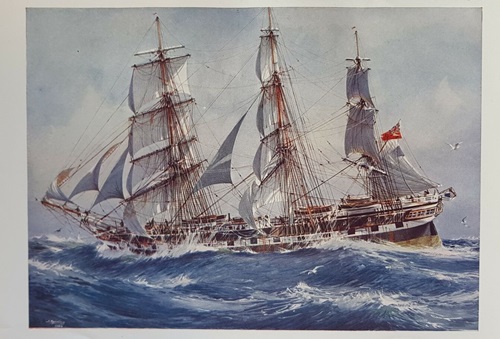
Artist’s impression of the Cospatrick in full sail
© Blue Peter Productions 1924

Look out for the following:

 • An exhibition of historic photographs, posters and newscuttings relating to the Cospatrick story in the Wychwoods Library, Milton, open from 4th November until mid December.

• The Society website has a new “Cospatrick Resources” page here with information about the Cospatrick story and links to many other sources of information relating to the Cospatrick and emigration from 19th Century Britain.

• The Society have compiled a new booklet giving an account of the Cospatrick story, and its place in Wychwoods history. This booklet has been generously sponsored by Simon Randall and Shipton Parish Council. The booklet will be available from 9th November.

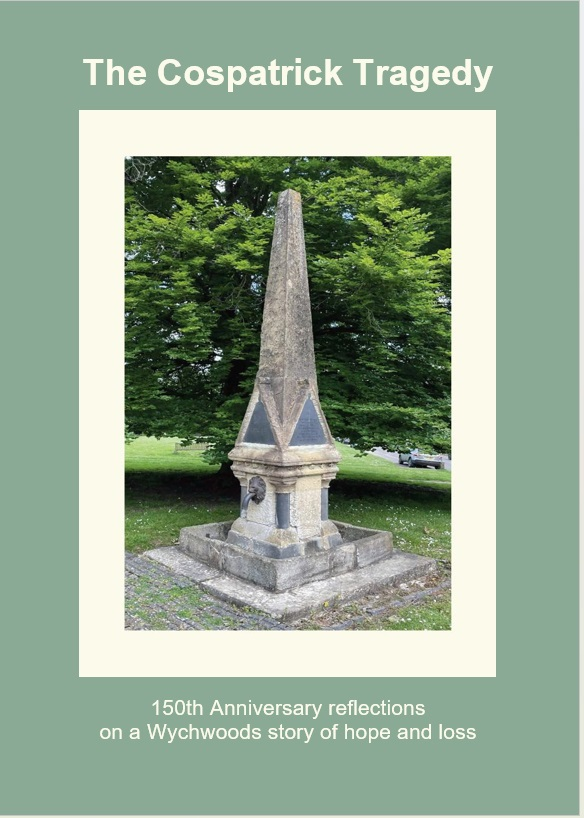
The Cospatrick Memorial on Shipton under Wychwood Village Green features on the booklet compiled by the society for Shipton Parish Council. Photo by Diane Melvin

• The Society’s evening Talk on 13th November is themed around the Cospatrick story. Talks by Carol Anderson and John Bennett will recount the story and its context as an episode in 19th Century emigration.

The evening will include a short audio recording of a dramatic emigration episode by former Society stalwart Duncan Waugh, and Jim Pearse will perform a poem on emigration that he first gave for the Society in 1990.

• Members of the Society are also contributing to the Oxfordshire Local History Society’s Study Day on emigration, This will be held at Burford Baptist chapel on 9th November, booking essential, further information here: [PDF Download in new window]

 • There will be a memorial service at the Cospatrick Memorial on Sunday 17th November, at 11.15am, led by the vicar Sarah Sharp. The 17th November is the actual 150th Anniversary of the Cospatrick fire. This will be followed by a service at Shipton Parish Church.

Corrugated Iron in the Wychwoods: A Review

Here is an article written to accompany an exhibition of photographs currently on show in the Wychwoods Library in Milton, depicting local examples of corrugated iron.

Corrugated iron, sometimes affectionately referred to as “wriggly tin”, once ruled the world as a cladding material for many kinds of building: housing, factories, workshops, schools, churches, chapels, barns, and all types of farm buildings. Its ease of use, durability, and speed of construction were all factors in its success all over the globe.

It is not surprising to find that there were many interesting examples of buildings in corrugated iron across the Wychwoods, though most have now disappeared.

Our Wychwoods Library exhibition celebrates some fascinating examples of this versatile building material in use.

When to Visit

Details of the Wychwoods Library in Milton opening times are here

The Parish Room Mystery: Can You Help?

As our website visitors know, the Wychwoods Local History Society have recently acquired a long-term home for the Society’s archive thanks to Alfred Groves & Sons. In the process of cataloguing this material we are unearthing several little-known snippets of Wychwoods history.

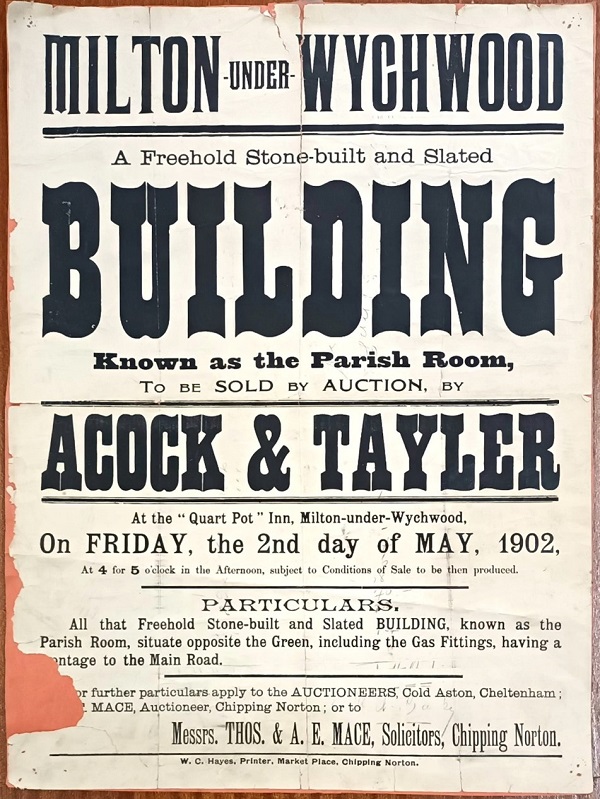
Poster of a 1902  Auction in Milton under Wychwood

One example came to light recently. This poster advertises the sale of a property on the Shipton Road in 1902. It was once apparently the “Parish Room”. We are mystified as to exactly which property this was.

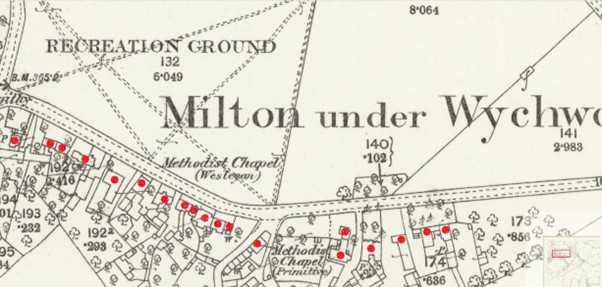
There are not so many properties on Shipton Road facing the Village Green (which was more extensive in 1902 than it is today), and we can exclude some buildings such as Hillborough House, the former Primitive Methodist Chapel, and The Elms and Elm Cottage (Groves Yard).

Here we have an extract from an OS map dating from 1881 which shows the buildings opposite the Green that were in existence at that time, (highlighted with a red dot). But which was the parish room?

Any ideas or handed down memories would be much appreciated. Please contact us, or visit “Memories of the Wychwoods” on Facebook.

A Short History of Milton-under-Wychwood High Street

Compiled by John A Bennett for the Wychwoods Local History Society

This article was prepared to coincide with Local and Community History Month, sponsored by the Historical Association, and to support an exhibition of historic photographs of the High Street at Milton-under-Wychwood Library,

Select from

Introduction | Before the 19th Century | The 19th Century | Shops and Pubs | Religion | 20th and 21st Centuries | Article Intro

High Street Milton
Street sign on High Street opposite to Jubilee Lane

These notes are a synthesis of information held in the journals of the Wychwoods Local History Society and they draw upon the valuable archive of historic photographs of Milton maintained by the Society. Contemporary photographs are the author’s own.

(The author is working on a larger history of the buildings of Milton-under-Wychwood and Upper Milton and if you have any historical background to your own house, please contact the Wychwoods Local History Society via our website: here).

Select from

Introduction | Before the 19th Century | The 19th Century | Shops and Pubs | Religion | 20th and 21st Centuries | Article Intro

Some Sculptural Curiosities in Milton-under-Wychwood

Milton under Wychwood  has some charming and unusual features—small sculptural carvings scattered across various properties throughout the village.

Bull’s Head, Milton High Street

While  not aiming to rival Florence’s grandeur, these modest pieces offer a glimpse into some lesser-known chapters of Milton’s history. The research in this article serves two main purposes:

•     To document these carvings as fascinating artefacts that enrich the village’s character.
•     To explore their historical context and suggest possible origins, especially since most have been relocated from now lost original settings.

Click the link to read online; Click/tap the download button to save as a PDF

If you have any insights or stories about the origins or past locations of these sculptures, the Wychwoods Local History Society would love to hear from you. Meantime, we are grateful  to  the owners of buildings who have provided information about their sculptures and allowed access to their properties to take photographs.

Some examples

A relief carving of a lion (?) inside property on Milton High Street
Standing man carved into a quoin now inside a property on Milton High Street
Angel Musician front view, former Wesleyan Mission Room
Angel Musician side view, former Wesleyan Mission Room
Carved head depicting Patrick Troughton as Dr Who, Groves Hardware Store 2014