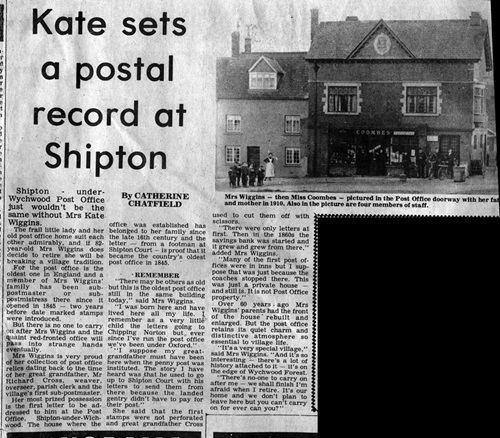
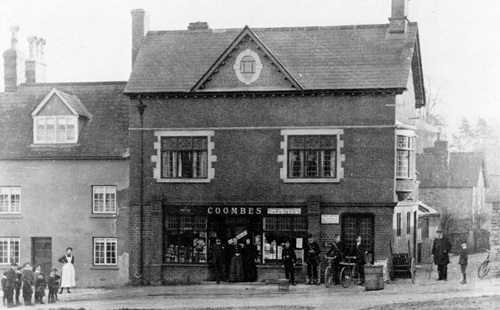
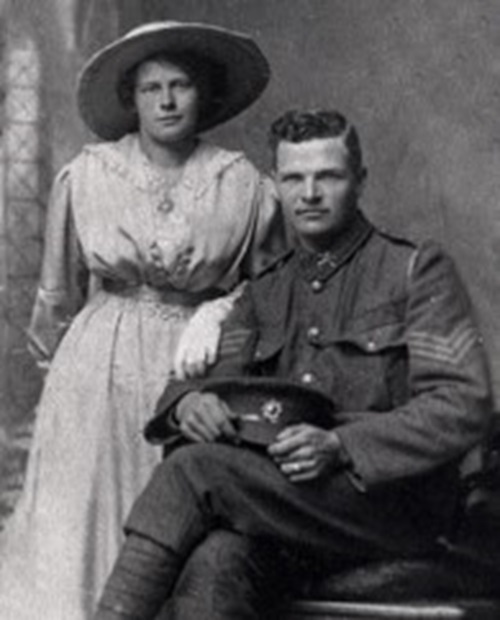
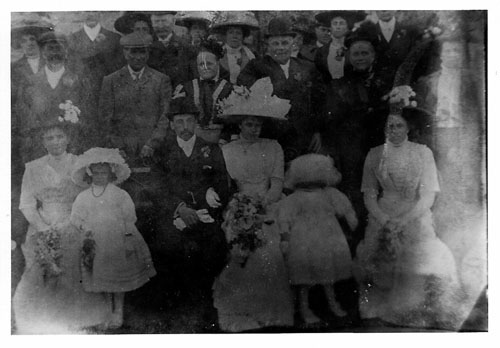
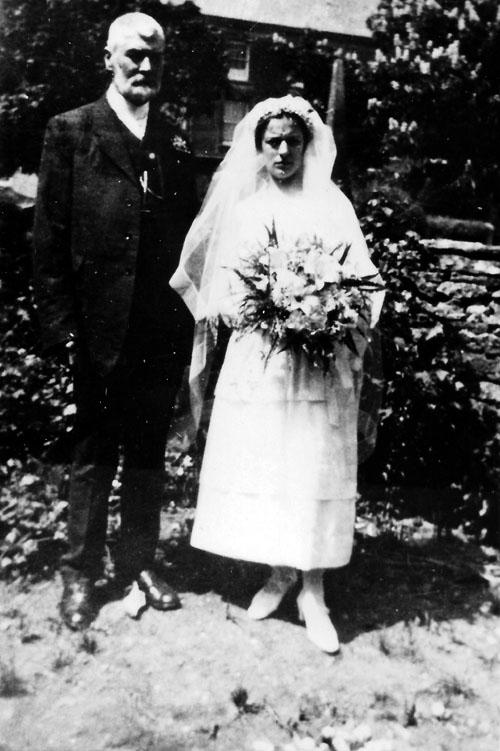
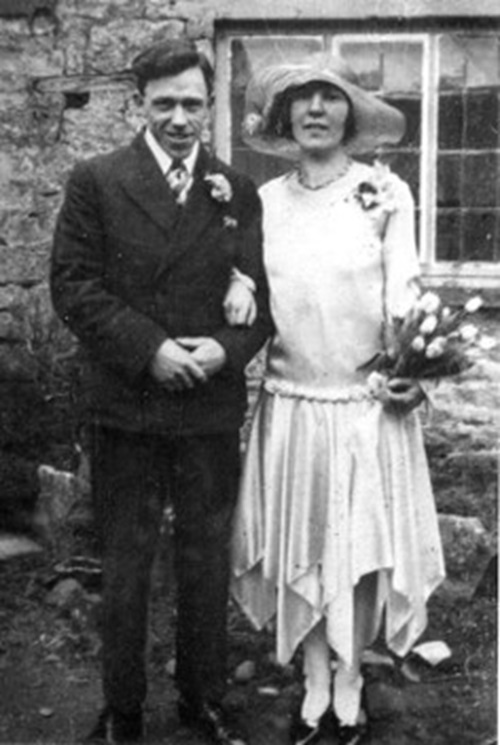
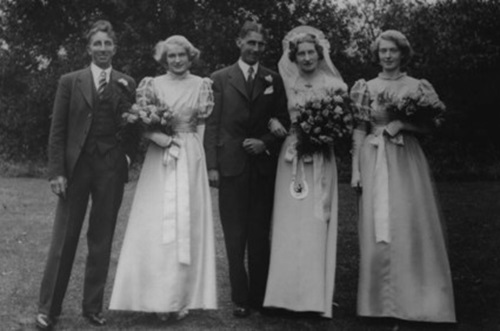
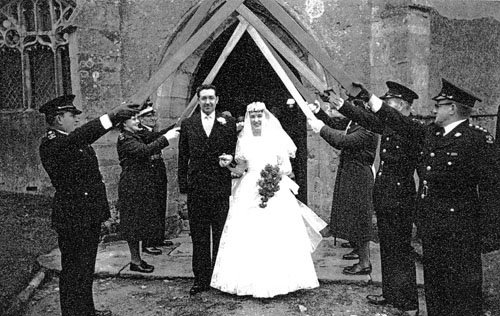
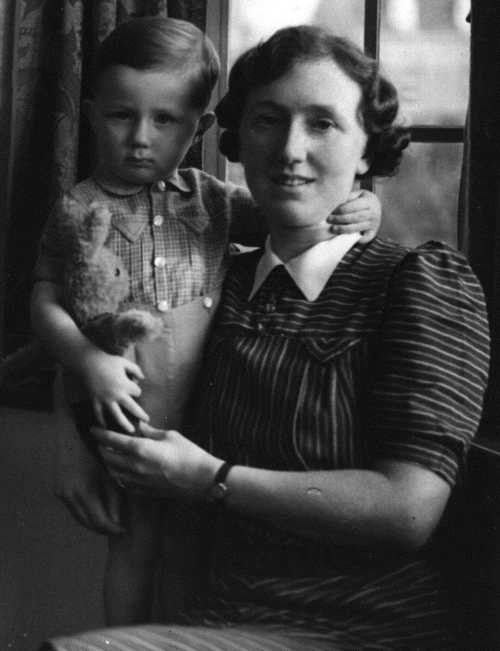
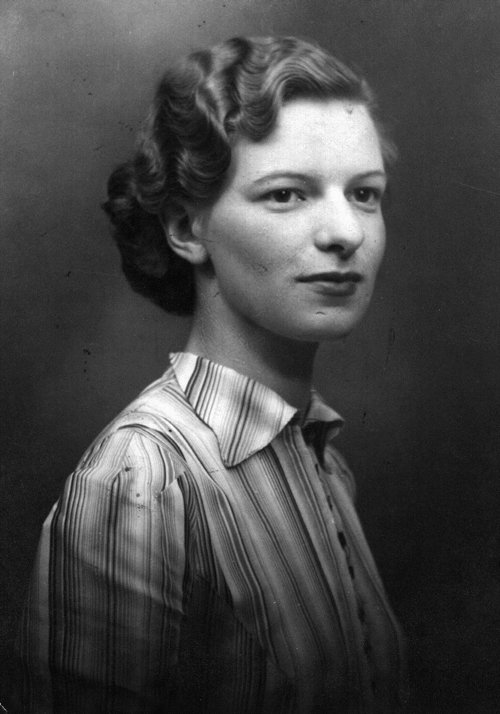
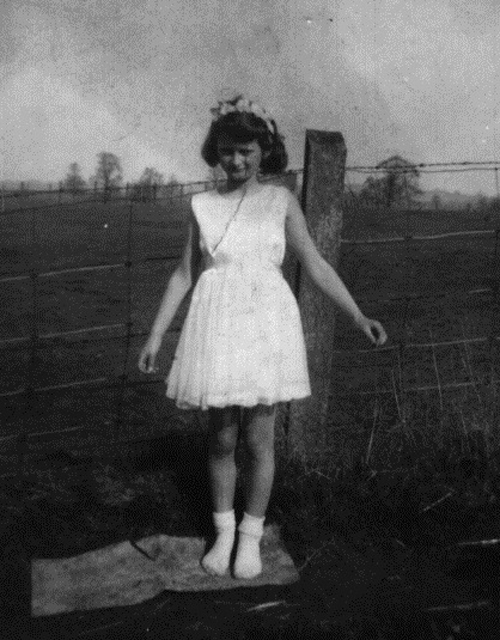
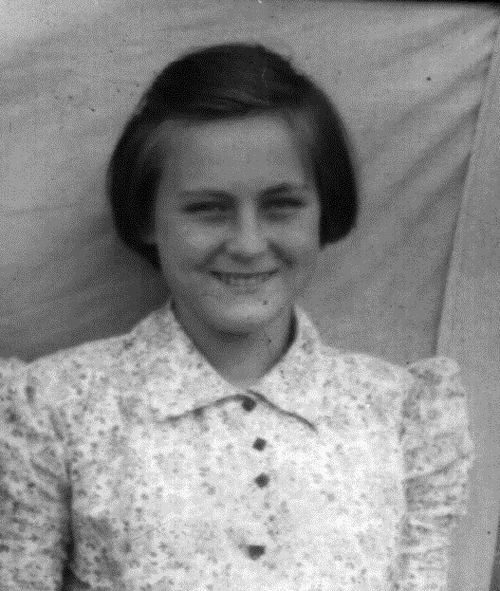
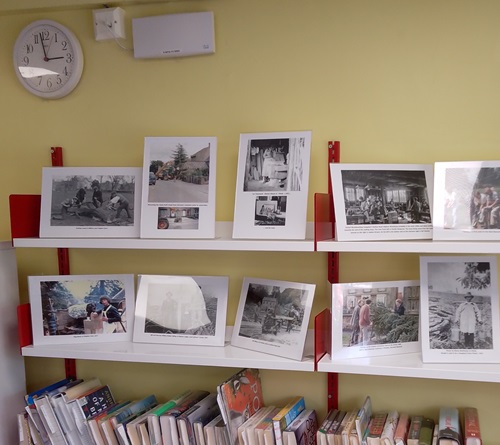
Our latest exhibition , installed from this weekend in the Wychwoods Library in Milton, features historic photographs of women over the years in the Wychwoods.
The Shipton WI produces a quilt. Left to Right: Unknown man, Dorothy Brooks, Vi Smith, Vera Cox, possibly Mrs Wright, Mabel Souch (Terry Souch’s mother), Miss Faulkner, Maggie Turner, possible Mrs Case, Mrs Chaffers (in glasses), Mrs Wain, Win White, Mrs Amy Kemp (1959)
International Women’s Day
As we mark International Women’s Day on March 8th, it feels fitting to look back at some of the remarkable women who shaped life in the Wychwoods throughout the 20th century.
Their stories are captured in photographs here and in our archives and journals. Wychwoods women also feature strongly in our oral history recordings. Their stories also reveal a community held together by resilience, creativity, and quiet determination.
Milton Temperance Society (band of Hope). Popular in the late 19th century, this national movement successfully campaigned to protect children from cruelty and neglect caused by widespread alcohol abuse.
Wychwoods Women During Wartime
During the interwar years and later in the 1930s and 1940s, local women stepped into roles that transformed both their own lives and the fabric of village society. Some served in the Women’s Land Army, keeping farms productive while men were away.
Betty ScottMarjorie RathboneJoan HallValerie DavisMary BarnesWychwoods Women in WW2
Others joined the ATS or worked in munitions, cycled miles to volunteer as nurses, or kept households running under the strain of rationing and uncertainty. Their contributions were often unsung, yet they were essential to the survival and spirit of the community.
Women’s Groups and Activities in the Wychwoods
In the decades before and after, women were to be the backbone of village life. The Women’s Institute flourished across the Wychwood parishes, offering not only companionship but also a platform for learning, leadership, and local action.
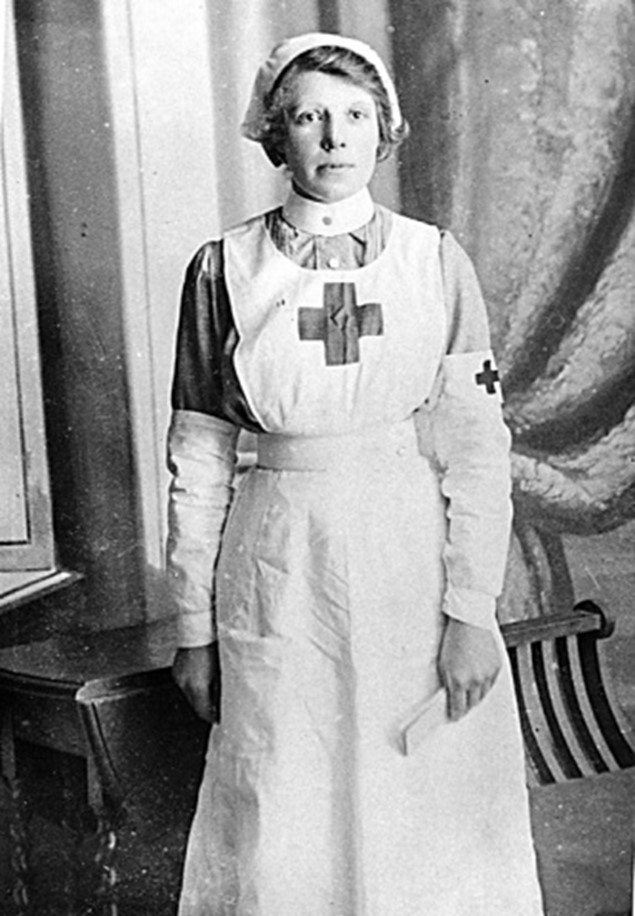
Vi Miles and Kath Pinches at bazaar for surgery comforts fundMuriel Scrivener (nee Rawlins). A nurse at Bruern Abbey during the First World WarChurch Street Sale 1959
Photographs from Edwardian times through to the 1970s show groups of women in surprising roles , not only organising fêtes, preserving local crafts and making their voices heard on rural issues, but flying aircraft, working the land and assuming pivotal roles throughout the century.
These images remind us that history is not only shaped by grand events but by the steady, committed efforts of ordinary people. Inspired by International Women’s Day, our exhibition of images celebrates the Wychwood women who helped build and sustain our community.
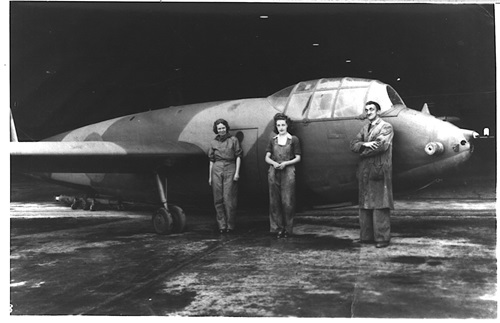
Many local women, like Betty Duester(later Brown), seen here (centre) in front of a glider at Rissington, ‘did their bit’ in World War 2
Wychwoods Women: Oral Histories
Our Audio Files/Oral Histories archive contains many interviews made in the 1980s and 1990s, with women who recall Wychwoods life over eight decades between 1900 and the 1980s. Here are a few samples:
Rose Burson Audio
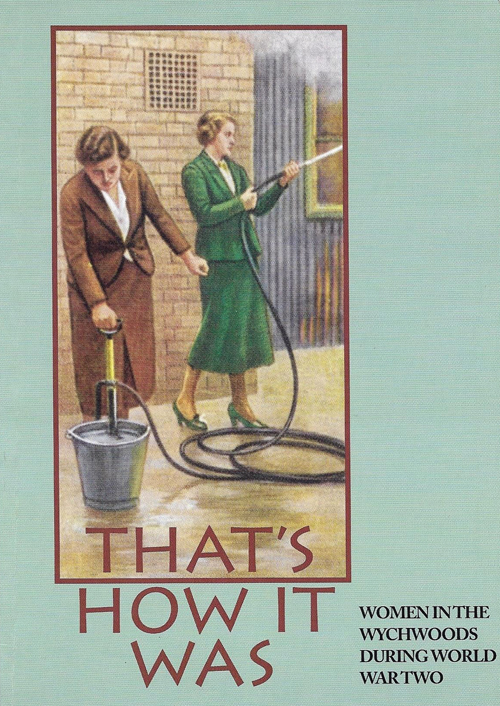
Rose was one of the interviewees for the Wychwoods Local History Society publication “That’s How It Was”. More about this is here [Opens in new tab]
[ Each of the following links opens in a new tab ]
In this set of reminiscences, Dor Thomson recalls many details and anecdotes from her life as child and growing up at Shipton Court. The 2004 WLHS Journal No 19 contains many excerpts from these memoirs, as well as a summary of her life during and after her time at Shipton Court.
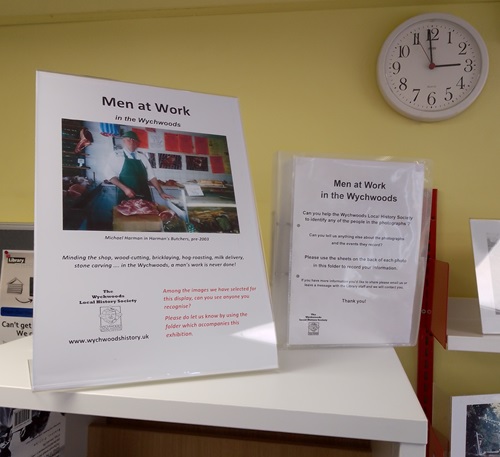
Our latest exhibition in the Wychwoods Library in Milton features historic photographs of public houses in the Wychwoods.
As all over the country, public houses have long shaped the social fabric of the Wychwoods villages, acting as gathering places, landmarks, and witnesses to the ebb and flow of rural life.
Across Shipton, Milton, Fifield and Ascott, today’s familiar establishments stand alongside the ghosts of those that have disappeared—such as the Coach and Horses in Milton, or the Churchill Arms in Ascott – once central to village life but now remembered only in records and recollections.
Even surviving pubs have had their battles – Milton’s The Hare, for example , undergoing several incarnations and name changes, reflecting shifting tastes and economic pressures.
Our photos tell the stories of these public houses—those still thriving, those transformed, and those erased from the landscape.
Putting them together, from the archive on our website and those yet to be scanned, we can explore how they mirror broader patterns of social change, community identity, and rural resilience.
Wychwoods Pub-related images from our Photograph Archive
Some names change; some pubs disappear. Pubs evolve. Stories remain
Open this link for a selection of photos from our archive
Here follows brief summary information on some of the pubs represented:
The Churchill Arms, Ascott under Wychwood
The Churchill Arms on London Lane in Ascott operated in the 19th and 20th centuries as one of the village’s two public houses. Its history and its landlords traceable through trade directories and Census returns.
The Churchill Arms – Viewed towards the station
It began life about 1820, at the west end of the High Street, where it remained until the 1850s when it moved to much larger, purpose-built 11-roomed premises near the station in London Lane. Here the proprietor could take advantage of the increased trade offered by the newly arrived railway.
The new Churchill Arms provided accommodation for visitors and travellers, as well as large rooms that could be hired for social gatherings.
The Shipton Conservative Association often held their annual dinner there. Local resident Fred Russell recalls that when the Ascott cricket team played on the field on the other side of the railway adjacent to Manor Farm, tea was taken in the Churchill Arms. ‘The Churchill regulars were conservative in their views and supported the country pursuits of hunting and fishing. The regulars at the Swan were more raucous and louder and had no pretensions to be country gentlemen.’
In the second half of the 20th century the Churchill Arms was renamed the Wychwood Arms Hotel before finally closing in 1989 to become a private dwelling, today called Sunset House.
Research: Carol Anderson
The Swan, Ascott under Wychwood
The Swan currently occupies one of Ascott‑under‑Wychwood’s oldest surviving buildings, although it has only been here since the early 19th century. Although its origins may go back further, the Swan is first recorded in the mid-18th century in premises on the west side of the village green near the forge.
From here the inn moved to the west end of the High Street before, confusingly, changing its name to the Churchill Arms in the early 19th century. But the original name was soon revived when a new Swan Inn opened, sometime before 1834, on the current premises in Shipton Road, previously a farmhouse and bakery opposite the village Pound.
Unlike the Churchill Arms, the Swan was not purpose-built, but rather a home in which the licensee’s family also lived and worked at various trades and crafts, as the income from the alehouse alone was not enough to sustain a family.
The 1911 Census records it as having only 4 rooms. By 1910 the premises, which included both land and buildings, had passed from private ownership to Morrells, the renowned Oxford brewing company. Subsequently being sold by Morrells and returning to private ownership.
For almost two hundred years operating from its current premises, the Swan has played a key part in village life, frequented primarily by the agricultural labourers who made up the majority of the population. The village football team, with its roots in the working class, met there after matches to celebrate or drown their sorrows.
From 1945 to 1965 it hosted meetings of the Ascott lodge of the Royal Antediluvian Order of Buffaloes. Over time the Swan has served the community in many ways including from the late 1980s to 2007 hosting staff from Milton post office to enable them to run a weekly service in Ascott.
Today it has entered a new phase of its history as a ‘gastro-pub’ with ‘spacious and glamorously comfortable accommodation’ offering its clientele ‘a stylish mix of rural chic and professional service’, described by Cosmopolitan as a ‘kind of fantasy country pub’! A far cry from its rural working-class roots. [Website here] [Opens in new tab]
Research: Carol Anderson
The Quart Pot, Milton under Wychwood
The Quart Pot stood on the High Street in Milton-under-Wychwood and served for many years as the village’s main public house.
By the 2000s, the pub was owned by Greene King Brewery. Like many rural pubs facing economic pressures, it struggled to remain viable. Greene King closed the Quart Pot in 2010.
After closure, the brewery attempted to sell the building, and a developer—Acres Developments of Bournemouth—submitted a planning application to convert the pub into a private house.
The proposed conversion met strong resistance from villagers, who argued that the pub was an important community asset. In 2012, West Oxfordshire District Council refused planning permission for the conversion, siding with local objections.
This refusal preserved the possibility of the building returning to use as a public house.
Councillors Jeff Haine and the late Rodney Rose were part of the 2012 fight to keep the last remaining pub in the village and to prevent it being converted to housing. Photo c. The Witney Gazette
The turning point was when the Quart Pot reopened in March 2016 as The Hare, the modern gastropub that continues to serve the village today. Although the name changed, the building’s role as a social hub was restored.
The (Shaven) Crown , Shipton under Wychwood
The Crown (formerly the Shaven Crown) – as is Red Horse – was an old inn of Shipton. In 1578 the Crown Inn Charity was set up. Rent from letting the building was to be used for the upkeep of Shipton Bridge and Stokers Bridge, Milton, with any surplus to benefit the village. The property was sold by the trustees in 1930 but the Trust continued until combined with the Shipton United Charities in 1969.
The Crown has been an important meeting place over the centuries – the Vestry meetings (forerunners of the parish council) were always held there. The Crown Inn Friendly Society was founded in 1860 for ‘the mutual relief and maintenance of the members in sickness and infirmity.’ Their activities included a Club Day with its church parade and feast.
A comprehensive building record of the Shaven Crown is available here [Opens as PDF in new tab]
Sir Oswald Mosley; pictured at The Shaven Crown, Shipton under Wychwood, whilst under house arrest. Date: 1943
Today, the Crown continues to operate as a hotel and public house, maintaining its historic character while serving as one of the three notable inns in Shipton-under-Wychwood. Its position overlooking the green and its deep historical roots make it a distinctive landmark .
The Red Horse, Shipton under Wychwood
Now The Wychwood Inn, the building includes a Grade II listed section on Shipton‑under‑Wychwood’s High Street. It began as a private house before becoming part of the Red Horse public house.
The Red Horse Inn and junction with Milton Road about 1900
The Red Horse was long established by the early 1900s. A photograph from around 1900 shows the licensee Annie Longshaw, later known nationally as England’s oldest publican at the age of 98 in 1936. A 1903 guidebook noted that the inn’s courtyard once contained a medicinal fountain of local repute.
After closing for several years, the property was sold in 2012. Following refurbishment, it reopened under new ownership in June 2013 with its present name, The Wychwood Inn. See the article in the Witney Gazette here [Opens in new tab]
The inn continues to serve the village while preserving the historic fabric of the original building.
See more here in the article from our Wychwoods Album [Opens in new tab]
The Butchers Arms, Milton under Wychwood
The Butchers Arms was originally a brew house, victualler, and wheelwright, forming part of the Clinch brewery chain, a well‑known local brewery whose name still appears on the archway of the former pub. This places it firmly in the tradition of multifunctional rural pubs that served as both drinking houses and practical service centres for the community.
One of the earliest named licensees was Peter Brooks (1802–1862), a member of a long-established local family with connections to Shipton-under-Wychwood. Among the society’s photo archive from the early 20th century we show the pub active and central to village life, including an image of the landlord Parsloe with his sons around the 1910–1920 period.
The pub also hosted meetings of the Buffaloes, a social and charitable fraternal society popular among ex‑military men in the early 20th century.
The Butchers Arms was never a coaching inn, despite the presence of stabling for two horses. Instead, the yard served the practical needs of the wheelwright and brewery operations. The complex originally included several cottages, one of which later fell into disrepair and was demolished during conversion works.
By the 1970s, like many rural pubs, the Butchers Arms declined and eventually closed
In May 1986, stonemason and builder Jeff Broxholme bought the former pub for just under £5,000 and began an extensive, years‑long conversion project to turn the old Butchers Arms into a family home.
The Butcher’s Arms a significant public house on the High Street, and another venue for the Vestry meetings in the 19th Century. It closed in the 1970s becoming a private residence. The left-hand wing visible in this photograph was re-built in the 1980s.
The Coach and Horses, Milton under Wychwood
Green Lane was once bordered by open fields and farm tracks. Carts, hay wagons, and livestock regularly passed the inn’s door. The Coach and Horses at the junction of Shipton Road and Green Lane, would have been a natural stopping point for a pint, a rest, or a word with neighbours.
Before the rise of the car, Shipton station would have been a vital link to Oxford, Worcester, and beyond. Some villagers walking or riding to the station often passed the inn, and some undoubtedly paused there on their return.
As the 20th century progressed, the corner’s role changed dramatically. Agricultural mechanisation reduced foot and cart traffic. Motor vehicles shifted movement patterns toward the main roads. The closure of Shipton station to passengers diminished the route’s importance. All this would have had an effect. So the Coach and Horses, already modest in size, would have struggled to compete. It closed mid‑century and was converted into a private residence.
Gloucestershire Pubs is the work of Geoff Sandles, a retired postman with a life-long passion for both beer and pubs. The ambitious project is aiming to document and describe all the known pubs in the county of Gloucestershire, both past and present.
Here is the entry for the Merrymouth Inn, and our summary taken from it:
The Merrymouth Inn, situated on the historic route between Stow‑on‑the‑Wold and Burford, is one of the Cotswolds’ oldest surviving coaching inns, with origins dating to around 1260. Its earliest form served medieval travellers crossing the upland roads, and the building’s substantial stone construction still reflects this early character. By the 14th century, the inn formed part of the Murimuth family estate and was known as The Murimuth Arms, placing it firmly within the manorial landscape of medieval Oxfordshire.
Beneath the northern end of the inn lie vaulted stone cellars, long associated with local folklore. Tradition holds that tunnels once linked these chambers to a nearby abbey during the turbulence of the Reformation, a story that, though unverified, remains an evocative part of the inn’s heritage.
Fifield Club gathering outside the Merrymouth Inn, Date 1909
Between the 16th and 17th centuries, the Merrymouth expanded into a fully fledged coaching inn, with stables, barns, and outbuildings arranged around the courtyard still visible today. In the 18th century, it became linked with the Dunsdon brothers, local highwaymen whose exploits coloured regional legend.
Through the centuries, the inn has remained a place of hospitality. Recent restoration has preserved its historic fabric, allowing guests to experience the atmosphere of an authentic English coaching inn.
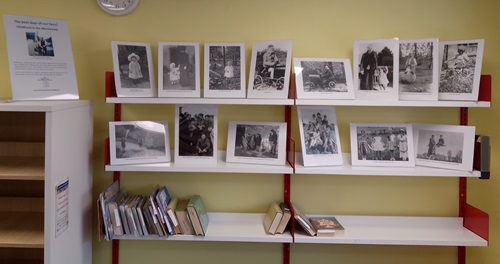
Our latest library exhibition is running now until mid-December 2025 in the Wychwoods Library in Milton. In creating this exhibition, the archive committee strikes a whimsical note. We celebrate the joys of dog ownership, looking at Wychwoods life from the point of view of the dogs themselves.
We feature a selection of images from Edwardian times to the mid-1980s, all of which include at least one dog – prominent or not so prominent! As with all our exhibitions in the Wychwoods Library in Milton, these images have been selected from our expanding photograph collection.
Spot the dogs in our latest library exhibition!
Dogs: Life’s Lovable Sidekicks
Whether curled up by the hearth or bounding across a field, dogs have long been cherished companions in every corner of British life. For families, they’re the muddy-pawed mischief-makers, loyal protectors, and bedtime cuddlers—always ready to chase sticks or steal sausages when no one’s looking. Children grow up with dogs as furry siblings, learning empathy, responsibility, and the joy of a wagging tail.
Older folk, meanwhile, know the quiet magic of canine company. A dog’s gentle presence turns solitude into serenity, and their unwavering devotion makes every walk feel like a parade. From tea-time chats to garden pottering, dogs are the ever-attentive audience and the best kind of gossip partners—rarely interrupting, always listening.
And then there’s the noble foxhound, galloping through misty meadows. Sleek, strong, and spirited, these dogs are bred for stamina and teamwork, embodying centuries of countryside culture. Their place in the field is as much about camaraderie as it is about chase.
Our autumn library exhibition celebrates dogs in all their glorious roles—muddy, majestic, mischievous. From the sofa to the saddle, they’re not just pets. They’re family, confidants, and co-adventurers.
Prepare to smile and reminisce – and to spot the dogs!
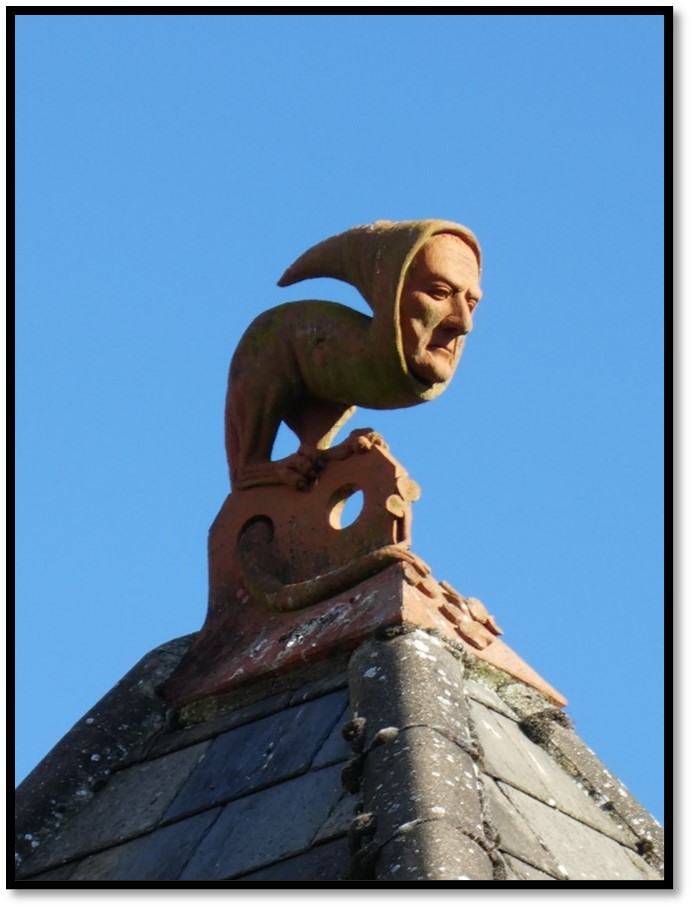
Terracotta sculpture of a hooded man with claw feet, Forest Gate, Frog Lane c. 1880-90
An unusual feature of Milton is the scattering of small pieces of sculpture which adorn a number of properties throughout the village.
Our latest exbition in the Wychwoods library in Milton celebrates many of these fascinating and unusual adornments.
The exhibition is on until mid-October, and coincides with the release of updated research on these curiosities.
Part of the exhibition – on until mid October
About the Milton Sculptures
We are never going to rival Florence in our sculptural adornment, but these little sculptural fragments illustrate a sometimes-overlooked theme in the history of the village. Almost all of these carvings have been relocated from unknown original settings.
Usually, sculptures in small rural villages in the Cotswolds and elsewhere, are to be found on and within the local parish church in the form of architectural ornament or funerary monuments. However, almost all the ones in this exhibition are scattered among the domestic buildings of Milton. That is unusual.
Most of these survivors are a legacy of the presence of Alfred Groves and Sons in the village. Many are probably salvaged features from the demolition or restoration of other buildings in the region by Groves, or sample pieces undertaken by apprentices.
There are other pieces of sculpture and ad hoc bits of carving inside a few properties within the village, which are not on public view, but are also a legacy of the presence of masons in the village.
Updated Research
The updated research on these curiosities , developed from the original 2020 publication, is available to read and download here:
United Woodworking Company Workforce in about 1936
Our latest library exhibition is running now until mid-August 2025 in the Wychwoods Library in Milton. We feature a selection of images of Wychwoods men at their labours in all kinds of occupations. As with all our exhibitions in the library, these images have been selected from donations over time to our archive.
Ascott under Wychwood. Chestnut Close now called Wychwood Manor with group of workmen (perhaps the builders?)
Hog Roast at Shipton Fete 1977
Putting up the Shipton Christmas Tree on the Green 1982 Left to right Malcolm Cochrane, C Preston, Bernard Hawcutt
Photo by Maria Matthews of Fifield. Model is said to be a Shepherd from Fifield. : Date: 1902
Les Townsend - Master Mason; Fifield. Photograph of his tool set. ; Date: c.1952
Les Townsend - Master Mason: Fifield:. Date: c.1952
Ox-roasting in Moreton-in-Marsh in celebration of Queen Elizabeth II Coronation - 1953
Rebuilding The Old Bakehouse, Upper Milton Mr Smith and Mr Fred Silman Mr Smith, father of Amy (later Morrison) & Walter (m Vi Miles) Date: c1930
Photo taken in the Orchard Garden of 'Bleak House' Left to Right: John Goldingham - nephew of the Batt family Ken Rawlins - gardener for the Batt family 1920s -1950s Cyril Bridgeman - 'helper' from Pear Tree Close; may have been paid. Later worked for Wessex Electricity Date: 1930s
Ridley's milk delivery Milton c. 1940
Harman's Butchers, Michael Harman in shop, High Street Milton
Turning the first sods for the New Beaconsfield Hall Shipton 1997
Frog Lane Milton under Wychwood - Horace Burrus 1930s. Off to work
Cutting up wood Milton under Wychwood Poplar Farm House in corner
Groves timber yard Milton in the 1920s with Mr Thomas Alfred Groves
Bill and Norman Wilks timber felling at Shipton Lodge, Lord Latimers Estate 1940
Removing the stone bull's head from Harmon's butchers
Jack Wilkes in 1996 told John Rawlings that this was in fact Norman Wilkes and was not at Lyneham but possibly Churchill Heath in Churchill grounds
United Woodworking Co's Station Road Shipton Workshop probably in the early 1930s and taken looking towards the end of the making shop. The man front left is Charlie Norgrove. The man facing away from the camera second on the right is Jaybee Broom. On his left is Jim Slatter and on the extreme right is Sid Tierney JR says was taken around 1928
United Woodworking Company Workforce in about 1936 Taken in front of the polishing shop Back row from left:Ernie Belcher (Lyneham), Cyril Lainchbury, Victor Brooks, Don Pittaway, Horace Pittaway, Alf Carpenter Middle row from left: Jim Slatter, Sid Harvey, Phyllis Longshaw (nee Siford), Dan Wiggins, Alf Smith, Harry Coombes, Jaybee Broom, Laurie Pittaway, Francis Dix, Sid Tierney (Church Street), Norman Cooper Front row from left: Albert Longshaw (first husband of Phyllis Siford), Charlie Norgrove (Mount Pleasant), Charlie Stringer (Fifield), Arthur Shirley (Ascott), Fred Smith (Milton, second husband of Phyllis Siford), Alf Harvey (Alf Harvey and Sid Harvey were borthers as were Horace and Don Pittaway). Alf Harvey and Don Pittaway worked for the Company fromits inception in 1923. Sid Tierney was possibly the only man to have workied in all three tillyards when they were independent operations
United Woodworking Co Station Road Shipton. Phillip Hepden working on a device to raise bales onto a waggon pulled by a tractor to a design by Bob Griffin. Taken in 1950s
Work in the Wychwoods
The nature of employment in the Wychwood villages has shifted significantly over time. Traditionally, most villagers worked locally in agriculture, wood-based trades, domestic service, railways, schools, and self-employed roles like cobbler, blacksmith, or chimney sweep. Agriculture continues of course, but mechanisation has reduced manpower needs. From the 1960s, many of these other jobs have largely disappeared, replaced by roles aligned with modern life—such as work involving computers, electronics, pet care, and part-time domestic services (e.g., cleaners, gardeners, home-helps), now often serving private homes, schools, and care facilities rather than large estates.
Building firms have moved from direct to contract labour, resulting in more self-employed tradespeople. There has also been growth in the transport and catering sectors.
In addition to these changes over time, there has been a major increase in remote work, with residents running businesses from home thanks to digital connectivity.
Read on for selected articles on business, trades and industry in the Wychwoods
Our latest library exhibition is running now until mid-June 2025 in the Wychwoods Library in Milton. We feature a selection of images inspired by childhood memories, from Edwardian times to the mid-1970s.
As with all our exhibitions in the Wychwoods Library in Milton, these images have been selected from donations over time to our archive. As always, we invite feedback from visitors: all comments and observations are welcome. We especially welcome any new information about the individuals depicted in our photographs. So often we find scant details attached to photos which come to us – and this is a common experience, whether for archivists, historians, or simply family members looking at pictures from our forebears who saw no reason to record details!
Childhood in the 1920s and 1930s, during the inter-war period and Great Depression, varied greatly by social class. It was marked by economic hardship for many. Education was compulsory from ages 5 (and earlier) to 14, though some children continued until 18 in grammar or fee-paying schools.
Schooling emphasised reading, writing, and arithmetic, alongside nature studies, country dancing, and practical skills such as sewing and woodwork. Discipline was strict, with punishments which would include writing lines or receiving the cane.
Outside school, children often helped with chores, while their playtime revolved around simple games and toys. Streets became playgrounds, where games like hopscotch, skipping, conkers, and football thrived. In summer, cricket was popular, while Double Dutch required skill with long skipping ropes. Newly published comics such as The Beano, The Magnet, and School Friend captivated children, offering tales of adventure and humour. Sweets, affordable with pocket money, provided small indulgences, with popular choices including Black Jacks and gobstoppers.
Childhood illnesses such as diphtheria, scarlet fever, and polio were common and could result in extended stays in isolation hospitals or long-term disabilities. Despite these challenges, children displayed resilience and creativity, making the most of limited resources.
The Second World War and After
The outbreak of war in 1939 disrupted these lives dramatically, as many children were evacuated from urban areas to the countryside, reshaping their experiences and altering their childhood forever. These years combined simplicity, hardship, and a strong sense of community.
These days, many of us who grew up in the postwar years can reflect on our own childhoods in the 1950s and 1960s, a time characterised by independence, outdoor play, and simpler entertainment.
During that era, children enjoyed freedoms now considered rare. They would leave home after breakfast, return briefly for lunch, and only come back at dinner, often dirty and bruised from adventurous play. In cities, bomb sites leftover from World War II, barren and open, became dens for imaginative exploration. With limited television programming, children relied on self-made entertainment—cycling for miles, fishing in local streams, and climbing trees in parks. Organized sports, such as cricket and football, dominated the streets, while girls often played skipping games or hopscotch. Traffic-free streets provided ample space for these activities, fostering a sense of community among children.
Family life tended still to be centred around traditional roles, with fathers working and mothers handling household chores. Meals were home-cooked, apart from occasional fish and chips, and snacking was minimal. Clothing and shoes were expensive, often handed down, and homemade items were common. There was little societal pressure for fashionable brands.
Looking back, summers seemed perpetually warm and sunny, as children spent most days outdoors. Streets now overwhelmed by traffic and parks lacking unaccompanied play reveal how times have changed. With the advent of technology and possibly also the impact of the Covid reset, free time in childhood has tended to shift indoors, focused on smartphones and video games. Perhaps we might say that reflecting on the 1950s and 1960s highlights a loss of innocence and the freedom that once defined growing up.
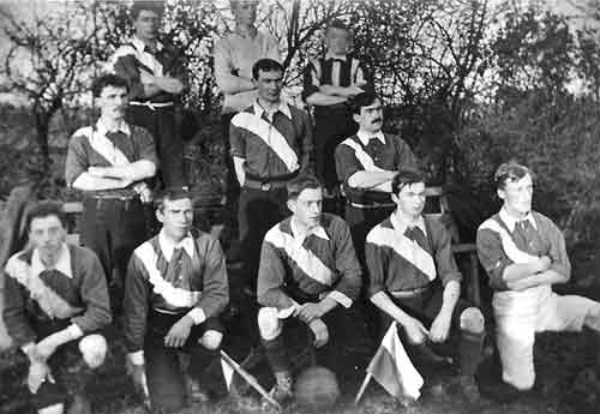
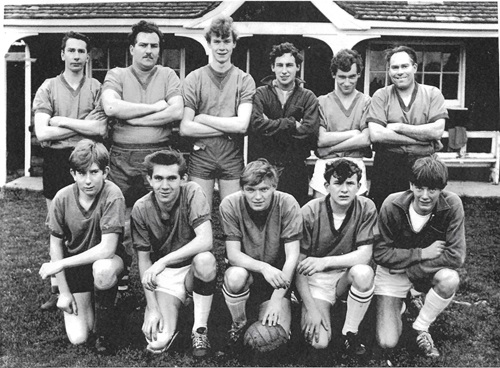
Our latest library exhibition is running now until mid-April 2025 in the Wychwoods Library in Milton. We feature a selection of images of local football teams and some action shots – covering dates from Edwardian times to the mid-1960s.
As with all our exhibitions in the Wychwoods Library in Milton, these images have been selected from our online archive.The origins of football in the Wychwoods can be traced back to the late 19th century, a period when the modern game was beginning to take shape across the country. Local records suggest that informal matches were played in village greens and schoolyards. These early games were often unstructured, with varying rules depending on the participants.
Milton Football Club Pre-World War One
As the popularity of football grew, so did the desire to form organised teams. By the early 20th century, several local football clubs had emerged in the Wychwoods. These clubs provided a structured environment for players and helped to standardise the rules of the game.
Village football continues to be an important focus for communities throughout the country, and football in the Wychwoods is no exception.
Longtime Ascott resident and keen footballer Fred Russell has kindly provided these recollections of his footballing years in the Wychwoods
Fred Russell – Milton under Wychwood Minors Football – 1950s
I left school at Christmas 1953, and early in 1954 I started work at the Tillyard in Shipton where they made wooden shop fitting , mostly wooden cash tills. The building stood near the old gas works in Shipton, two new houses now stand where I started my working life.
I soon noticed that late on Tuesday afternoons I could smell warm cooking fat, it was Ivy Avery firing up the stoves to sell fish and chips on Tuesday night.
Opposite Ivy’s grocery shop, Frank Coombes had his bicycle repair shop. Frank also sold leather football studs and white oil in medicine bottles which many of us young men of the villages would buy to rub on swollen ankles and tired legs after playing football. The label on the bottle read EMBROCATION WHITE OILS, FOR USE ON HORSES!
In my early days of playing for my village team many villages had to drive the sheep or cattle off the pitch before the game could start. This included my own village of Ascott. Milton always had a good pitch on the Green. Shipton pitch was where it is today beside the New Beaconsfield Hall, though this was before the new hall was built and the pitch was marked out in the other direction. The site of the New Beaconsfield Hall is where the Shipton children built their bonfire.
The headquarters of most village teams was the local pub. Many pubs provided a place in one of their outbuildings where the away team could change, but there were no showers or baths after a game. However, I recall one occasion, when Ascott played Dean, a small hamlet near Chadlington, whose headquarters were at the Malt Shovel in Chadlington. After the game on a late afternoon in November, the daylight almost gone, we were directed to one of the outbuildings where, stumbling over empty beer crates and barrels, we found a large, galvanised bathtub full of hot water. We stood in the water, still with our strip on, and washed the mud and muck off our legs. By the time we left the shed to get the bus home, the water in the bath was the colour of thick brown cocoa!
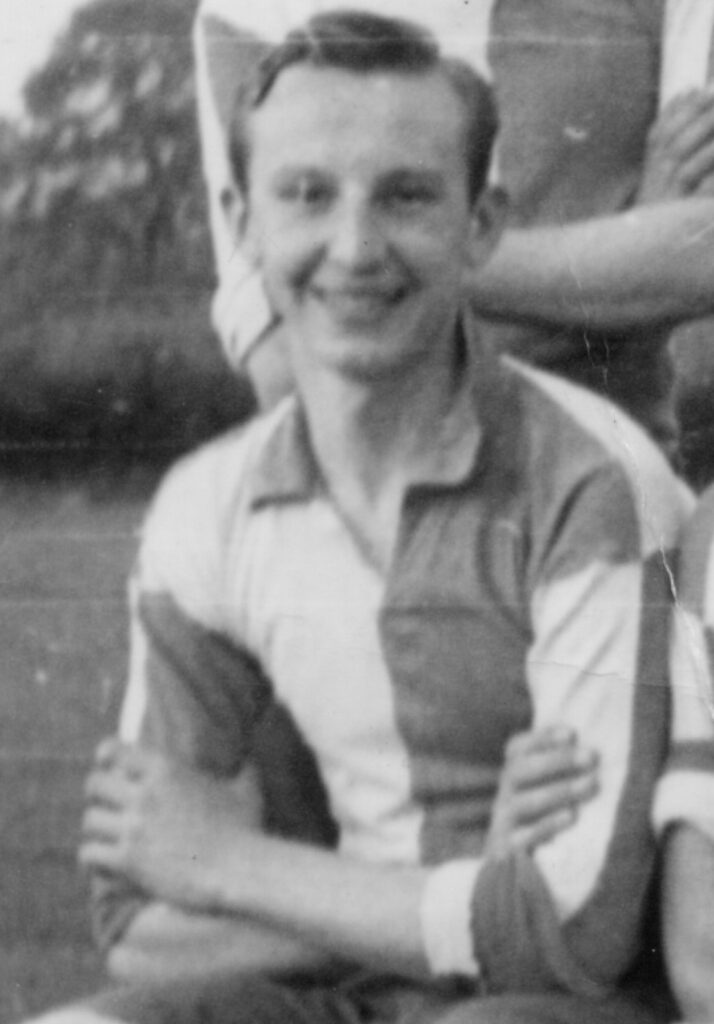
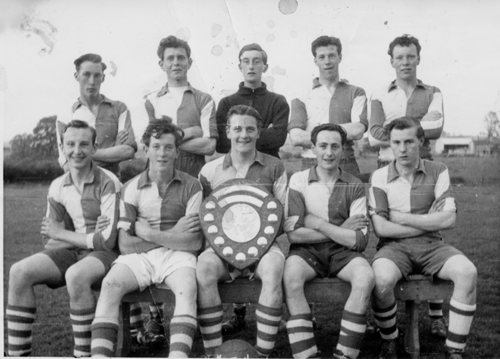
Milton under Wychwood Football Team mid-1950s with Oxford Youth League Challenge Shield. Fred Russell is first on the left of the front row.
The Ascott club hired the Backs Coach Company from Witney for away matches, this was often driven by Graham Arundel, a one-time keen footballer himself, and member of a well-respected Shipton family.
It was ten shillings to join the football club for the season, and if you were picked to play the match fee was two and sixpence, or half-a-crown (12.5p in today’s money). Half-a-crown would have paid for a decent seat at the pictures (cinema) in those days. The most expensive seats were three and six (17.5p), these were the seats favoured by courting couples. Sadly, I never did reach the back row of seats.
The best footballer I ever saw was Stanley Matthews who played for Stoke City for most of his career. I still think he is the best footballer I will ever see.
Our latest library exhibition running now until mid-November 2024 features a selection of images of autumn harvest activity in Wychwoods farms over the years
As with all our exhibitions in the Wychwoods Library in Milton, these images have been selected from our online archive.
See a wider selection of photographs on a harvest and farming theme >> here
Agriculture in the Wychwoods over Time
The Society has recorded many details of farming life in the Wychwoods, through its Journal and Album publications, audio recordings, evening talks and member contributions and research. Here we offer a few links to some of this material, recorded here on the Society website.
The First Prize winners of the under 5s Fancy Dress “King and Queen” at the 1977 Jubilee Celebrations in Coombes Close, Shipton under Wychwood.
Our latest library exhibition running now until mid-September 2024 has a set of intriguing photos of Wychwoods village fetes held over the years. We also display some images of other key festivities.
These have been selected from our online archive , as well as some images from the 1970s and 1990s recently discovered in the society’s Groves Yard archive.
These latter are simple scans from old transparencies. There are many more to process, and this is one of the many tasks in progress for the archive team.
Here is an article by Carol Anderson written to accompany an exhibition of photographs currently on show in the Wychwoods Library in Milton.
Carol’s review – available to download here – covers the varying cricketing activities in Ascott and Milton as well as the successes enjoyed by Shipton teams over the years.
Cricket has been played in the Wychwoods since at least the mid-19th century. Jackson’s Oxford Journal records a match between Shipton and Ascott, played on 24th August 1861 (Shipton scored 89, Ascott 35).
Shipton Cricket Club: Historic Moments
The Shipton Cricket Club website records that it is believed that village matches were staged in a field on the edge of Shipton near Fiveways. This is the junction of Leafield and Swinbrook Roads, Mawles and Plum Lane.
The club also records that country house cricket was played on the present ground in the late 19th century. This was made possible by the levelling and draining of the area by the Pepper family. This family were the owners of Shipton Court, which locals will know, stands opposite Shipton’s cricket ground.
A historic timeline of Shipton Cricket Club appearson the club website here. This includes links to videos of some of the early 21st century games played by Shipton Cricket Club at Lord’s.
The club first entered the National Village Knockout Competition in the mid-90s , reaching the final in 1997.
Sam Mendes, who was a regular player at this time, hosted a meal for the team at the Groucho Club on the eve of the match. In the event the final is overshadowed by the overnight death of Princess Diana. There are doubts about proceeding with the match but it goes ahead. The result was a defeat to Caldy of The Wirral.
Here is a video of pre-match interviews, and many slices of action from the match.
.. and here are some images from Shipton’s later visit to Lord’s in 2010:
We use cookies on our website to give you the most relevant experience by remembering your preferences and repeat visits. By clicking “Accept”, you consent to the use of ALL the cookies.
This website uses cookies to improve your experience while you navigate through the website. Out of these cookies, the cookies that are categorized as necessary are stored on your browser as they are essential for the working of basic functionalities of the website. We also use third-party cookies that help us analyze and understand how you use this website. These cookies will be stored in your browser only with your consent. You also have the option to opt-out of these cookies. But opting out of some of these cookies may have an effect on your browsing experience.
Necessary cookies are absolutely essential for the website to function properly. This category only includes cookies that ensures basic functionalities and security features of the website. These cookies do not store any personal information.
Functional cookies help to perform certain functionalities like sharing the content of the website on social media platforms, collect feedbacks, and other third-party features.
Performance cookies are used to understand and analyze the key performance indexes of the website which helps in delivering a better user experience for the visitors.
Analytical cookies are used to understand how visitors interact with the website. These cookies help provide information on metrics the number of visitors, bounce rate, traffic source, etc.
Advertisement cookies are used to provide visitors with relevant ads and marketing campaigns. These cookies track visitors across websites and collect information to provide customized ads.