- Introduction
- The Hedge Survey of Shipton and Milton under Wychwood
- Review
- Inquest Report
- The Society’s Archives
- Railway Timetable, 1853
- The Milton Graveyard Survey
- Cotham Cottage, Milton
- The Royal Manor of Sciptone and Neighbouring Estates in Domesday
- A Curious Find in Shipton
- The Probate Inventory of William Nyatt, 1587
Preface to The Wychwoods Local History Journal No 1
This, the first journal of the Wychwoods Local History Society, illustrates two major facts in profusion. First the energy, enthusiasm, enterprise and wide-ranging interests of the members of the Society, and secondly the historical richness of the territory they have set out to explore.
It is a large tract, described in different contexts in the contributions of Frank Ware, Sue Jourdan and Gwen Allen, encompassing the sweep of the Evenlode valley and the bare uplands of Shipton Down, and always shadowed by the presence of the royal forest of Wychwood.
The forest, both as actual woodland and in its wider legal sense, has put its stamp upon the three Wychwood villages of Shipton, Milton and Ascott and their neighbouring settlements. Even after the disafforestation ofthe 1850s the fact and mythology remained strong.
There was the late development (well into the Middle Ages) of settlements like Leafield and Finstock, cleared from the woodland; the strong royal presence and legal separateness of the forest; its distinctive economic activities and occupations; its wild and lawless reputation; and its relative impenetrability and isolation.
Understandably the forest, its lore and the many references to it in central government records, have intrigued the few previous historians of this area, as readers of John Kibble and Muriel Groves will know. Whilst recognising the importance of these themes the Wychwood historians of the 1980s have identified the many aspects of the life of their villages and parishes that remain relatively unknown, and have also looked afresh at the antiquarian accounts provided by earlier local historians. For example, having read this journal, none of us can say as Muriel Groves does in her History of Shipton under Wychwood (1934), that Domesday Book tells us that, “The village of Shipton was evidently in existence well before 1066, but there is little more to be deduced about it”
The range of subjects, periods and sources of information treated here will also impress the reader. W.G.Hoskins and his successors have taught all local historians the benefits of a wide-ranging perspective, of getting mud on our boots, of looking at the evidence of landscape, buildings, objects, maps and documents alike, and of knowing “our patch” and relating it to both general trends and specific local circumstances.
The work of the Wychwoods Society represents this approach put into practice.
The research has been guided by an admirable overall sense of priorities, as the account of the Milton graveyard survey makes clear, deciding what needs doing most urgently, who will find it useful, how to record it and how to make the information available. The members have set about acquiring the necessary knowledge, whether palaeographical, geological, linguistic or botanical, with determination and success.
They have grasped the nettle of publication, giving others the chance to know, discuss and add to their work. As one of the “professionals” on whom the Society has called from time to time and who has gained much from its members’ interest and generosity in making available their own work, I hope that their journal will prove an encouragement and an example for other local historians in the area and further afield.
Apart from the virtues I have already mentioned it provides a vivid example of the shared enthusiasm which makes local history such an absorbing pursuit.
Kate Tiller
Staff Tutor in Local History
Oxford University
Department of External Studies
[ Download Full Journal No 1 PDF here]
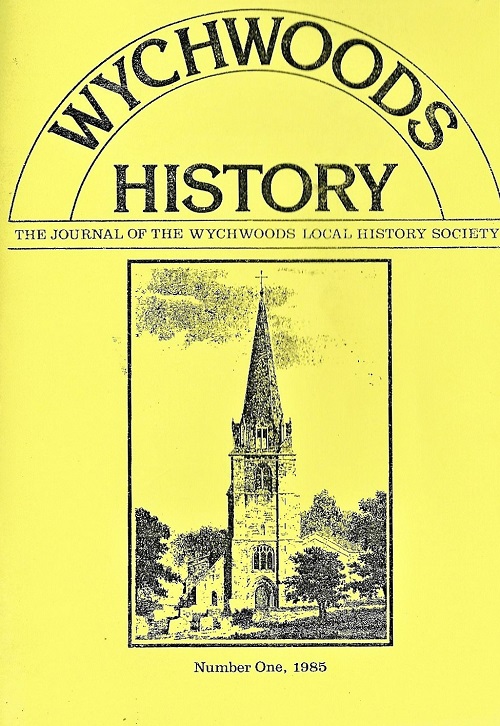
WYCHWOODS HISTORY – Number One (1985)
Purpose of the Journal
- This is the first issue of the Wychwoods Local History Society journal.
- It showcases the enthusiasm, research efforts, and wide interests of local members.
- The area’s historical richness—especially the influence of the Royal Forest of Wychwood—is a central theme.
Key Themes in the Preface
- The Wychwood region includes the Evenlode valley, Shipton Down, and surrounding villages.
- The forest’s legal and physical presence shaped settlement patterns, occupations, and local identity.
- Earlier historians focused heavily on the forest; the Society aims to broaden the scope to everyday village life.
Introduction to the Society
- Founded in 1981 after a well-attended public meeting.
- Quickly grew to 87 members in the first year.
- Activities include:
- Lectures
- Exhibitions
- Practical research workshops
- Due to limited printed sources, members rely heavily on primary documents and fieldwork.
Major Article: The Hedge Survey of Shipton & Milton
A substantial portion of the journal is devoted to a detailed hedge survey, including:
Goals
- Understand historical land use through hedge species composition.
- Record hedges before they disappear.
- Compare findings with tithe maps, enclosure awards, estate records, and oral history.
Method
- Hedges surveyed in 30-yard sections, following Dr Max Hooper’s dating method.
- Species counted and mapped; hedges grouped into:
- 1–4 species (younger, post-enclosure)
- 5–7 species (older, private enclosure era)
- 8+ species (ancient boundaries, trackways, parish edges)
Findings
- Hawthorn dominates all hedges.
- Elder, blackthorn, dog rose commonly invade younger hedges.
- Hazel, spindle, privet, wayfaring tree appear in older hedges.
- Species distribution aligns with:
- Medieval open-field systems
- Enclosure patterns
- Known woodland clearance before 1086
- Some hedges correspond to lost mills, medieval fishponds, deserted villages, and ancient boundaries.
Milton Graveyard Survey (Overview)
- Conducted to preserve information before stones weather or are removed.
- Includes:
- A detailed plan of the graveyard
- Full transcription of inscriptions
- Notes on local family names (Miles, Groves, Dore, Simms)
- Earliest marked graves date from 1855.
Additional Content
- Review of Beryl Schumer’s The Evolution of Wychwood.
- Inquest report (1885) describing a fatal quarry accident.
- Society archives: census transcriptions, parish registers, maps, leases, and local documents.
- Railway timetable (1853) reproduced as a historical artifact.
Full Archive of Journals – Contents, Introductions and PDF Downloads
[ No 1 ] [ No 2 ] [ No 3 ] [ No 4 ] [ No 5 ] [ No 6 ] [ No 7 ] [ No 8 ]
[ No 9 ] [ No 10] [ No 11 ] [ No 12 ] [ No 13 ] [ No 14 ] [ No 15 ] [ No 16 ]
[ No 17 ] [ No 18] [ No 19 ] [ No 20 ] [ No 21 ] [ No 22 ] [ No 23 ] [ No 24 ]
[ No 25 ] [ No 26 ] [ No 27 ] [ No 28] [ No 29 ] [ No 30 ] [ No 31 ] [ Journals Home ]