Here is an article written to accompany an exhibition of photographs currently on show in the Wychwoods Library in Milton, depicting local examples of corrugated iron.
Corrugated iron, sometimes affectionately referred to as “wriggly tin”, once ruled the world as a cladding material for many kinds of building: housing, factories, workshops, schools, churches, chapels, barns, and all types of farm buildings. Its ease of use, durability, and speed of construction were all factors in its success all over the globe.
It is not surprising to find that there were many interesting examples of buildings in corrugated iron across the Wychwoods, though most have now disappeared.
Our Wychwoods Library exhibition celebrates some fascinating examples of this versatile building material in use.
When to Visit
Details of the Wychwoods Library in Milton opening times are here
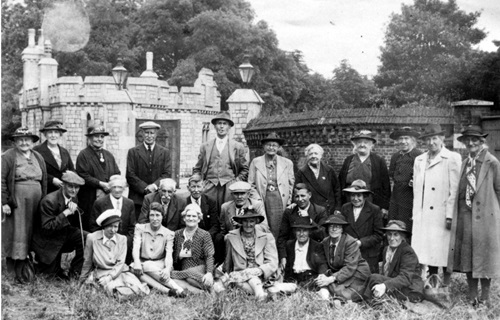
Among the many photographs scanned by the Society photo scanning group, was a picture of a village outing, for which no information was (or could be) supplied at the time of the scan.
We noticed that there is a similar image which Burford Tolsey Museum and Archive posted on Facebook, but also with no information about its subject matter!
We felt it should be identifiable from that distinctive bit of architecture in the background, but we could not relate it to anything local that we knew.
However, with the aid of Google Lens we were able to identify the location of this photo as ….. Windsor Castle!
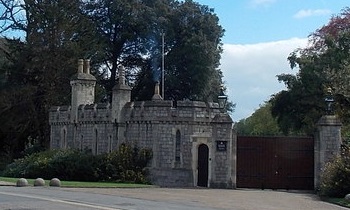
Here is another photo which shows the lodge and the distinctive brick wall also visible in the photograph.
So, we know that our photo was taken just beside Datchet Gate Lodge, close to Windsor and Eton Riverside railway station. The lodge was built circa 1820-30, and is grade II listed.
Our investigations showed that outings to Windsor Castle were popular in the Edwardian period. There were also the annual Royal Windsor flower shows, started in 1892, which meant that some parts of the castle grounds were opened up, and which may have been a cause of many outings.
Though we still have no details of this group, or indeed have not researched into any of the names, it is to be hoped that one day we will know more. However, the use of AI and image recognition technology is likely to be of growing help to us in the near future.
During a recent Wychwoods History Society talk, Chris Pickford, expert in the history of bells and bellringing, made a special mention of the bells at St Nicholas’ Church in Chadlington.
He reminded us of interesting times, when a landowner could bodily remove a village and its inhabitants to improve estate parklands. In this case we have Lord Harcourt of Nuneham Courtenay doing exactly that. In the 1760s, he demolished the church and removed its five bells.
Chris Pickford’s research – featured here on the Wychwoods History website – demonstrates in detail how those five bells, with a sixth added in 1796, are now housed in Chadlington church – a rare early example of a transferred ringing peal of bells.
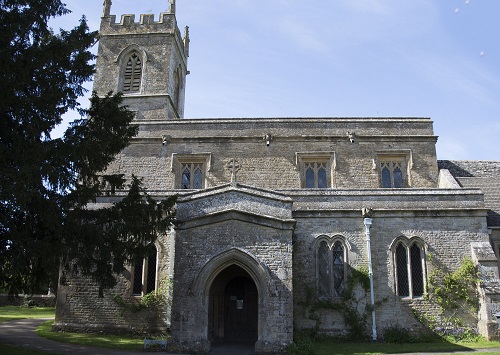
St. Nicholas Church, Chadlinton
In this coronation year with bellringing very much part of the celebrations marking change, it seems apposite to think of stories such as these. There is a rich history hidden in church towers throughout the land, and particularly in the Wychwoods. Bells can be vulnerable – one thinks of the church of St. Peter and St. Paul in Deddington, where all but one of the five bells had been requisitioned by Charles I in 1643 and melted down to be made into artillery!
A less dramatic reminder of the need to look after the heritage of bells was the refurbishment and re-hanging of the bells in Shipton in 2019 – an event which brought the community together in fundraising to ensure their future.
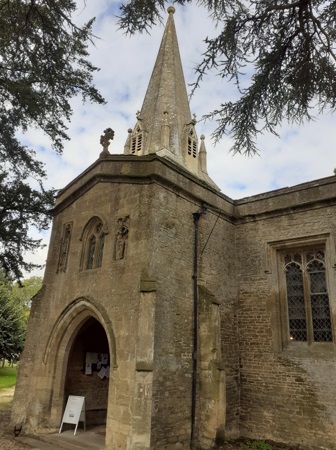
St. Nicholas, Shipton under Wychwood
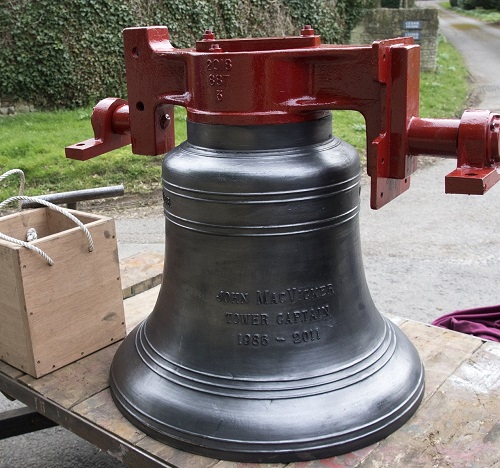
Shipton Refurbished Bell. The 3rd bell, with inscription JOHN MacVICKER TOWER CAPTAIN 1986 to 2011, was recast and returned on 19th March 2019
Those Shipton bells were worked on by the last remaining bell foundry in the UK, John Taylor and Sons in Loughborough. But moving bells around the country was not always so straightforward. The two 15th-century bells at St. Nicholas Church in Idbury would have been made on site in a casting pit. Medieval transport systems precluded such manufacturing off site.
Bells at Ascott Holy Trinty Church
Ascott Holy Trinity is notable. Five of its six bells were cast in 1744 by Henry Bagley III. The family is important to the history of bellfounding in our area, having established a foundry in Witney and supplying bells for towers in Fulbrook, Witney, Shilton, Westwell and Standlake.
Bells at Fulbrook Church
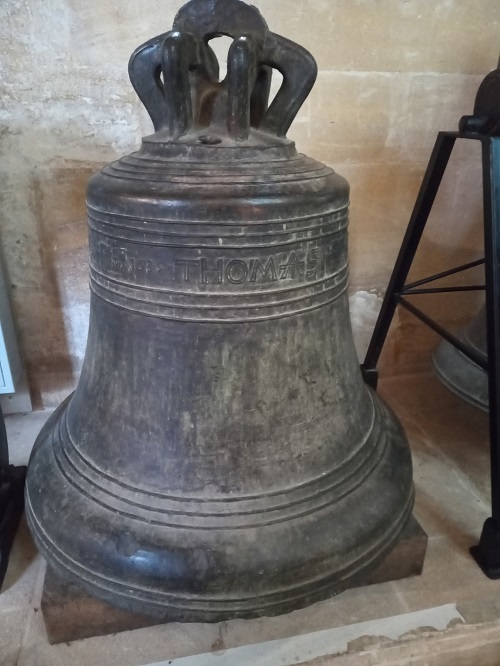
At Fulbrook until 2003 the ring of three included treble and tenor cast in Burford by Edward Neale – of the earlier and equally important bell-founding family. Neale’s Sanctus bell dates from 1649 and is still in use. Once again, village fundraising in Fulbrook allowed a new bell frame to be installed for a ring of six. The original treble now stands in the north aisle of Burford Church – the “bellfounders’ aisle”, beside two other Neale bells.
A Fulbrook Neale Bell at Burford
A single bell one might say, can have mournful overtones. I think of the curfew bell in Gray’s Elegy tolling the knell of parting day. Perhaps also of John Donne’s “never send to know for whom the bell tolls”. This latter is a somewhat ominous expression of the interconnectedness of humankind. This is better and more joyfully expressed by the change-ringing of multiple bells, and perhaps also by the simple “Peace and good neighbourhood” message on the treble bell at Idbury, and on the fourth of Chadlington’s peal of six.
Compiled by John A Bennett for the Wychwoods Local History Society
This article was prepared to coincide with Local and Community History Month, sponsored by the Historical Association, and to support an exhibition of historic photographs of the High Street at Milton-under-Wychwood Library,
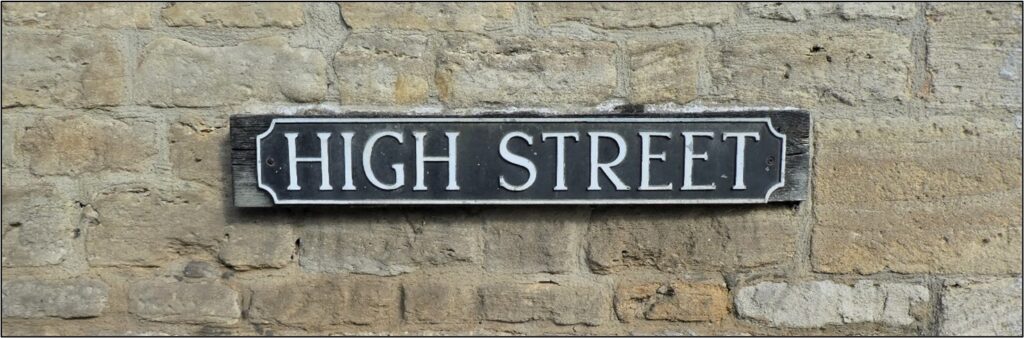
Street sign on High Street opposite to Jubilee Lane
These notes are a synthesis of information held in the journals of the Wychwoods Local History Society and they draw upon the valuable archive of historic photographs of Milton maintained by the Society. Contemporary photographs are the author’s own.
(The author is working on a larger history of the buildings of Milton-under-Wychwood and Upper Milton and if you have any historical background to your own house, please contact the Wychwoods Local History Society via our website: here).
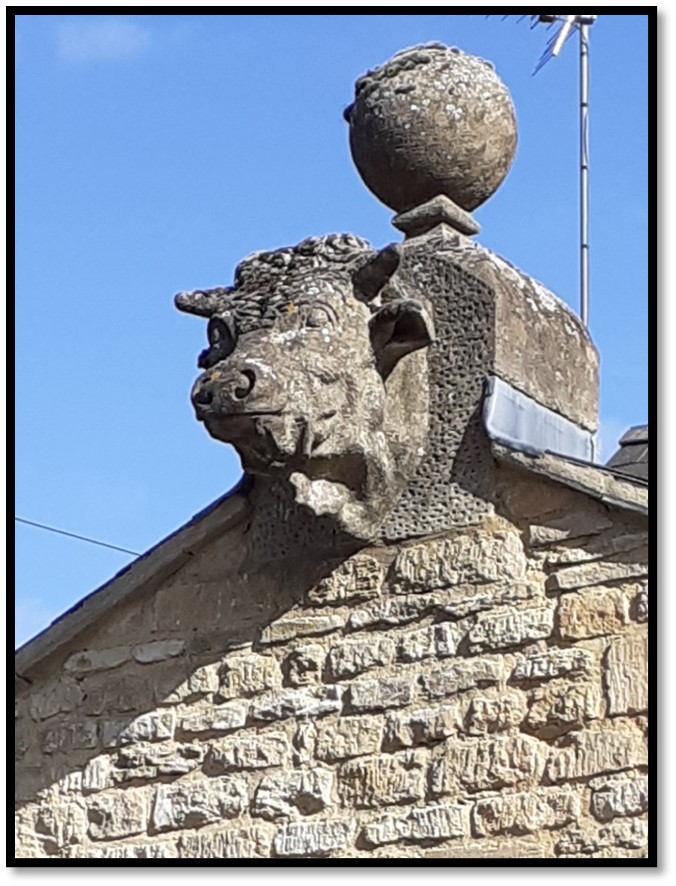
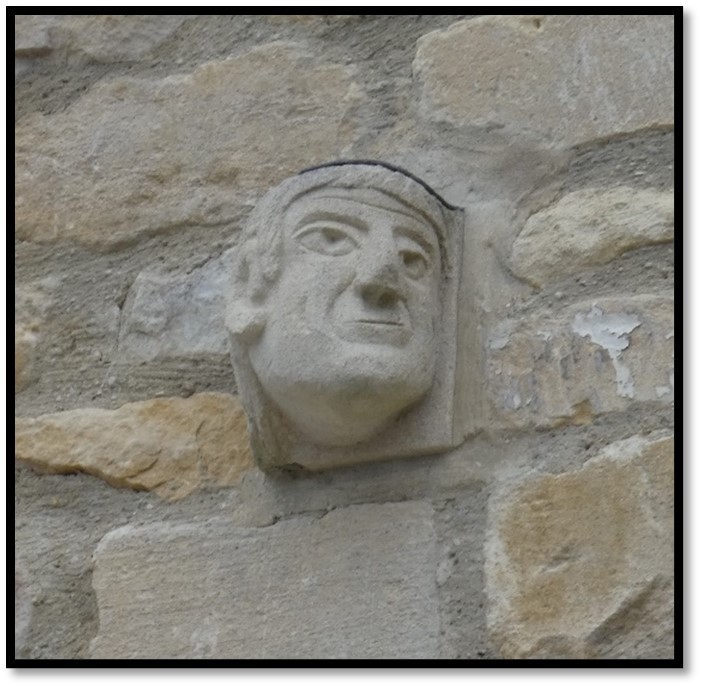
Milton under Wychwood has some charming and unusual features—small sculptural carvings scattered across various properties throughout the village.
Bull’s Head, Milton High Street
While not aiming to rival Florence’s grandeur, these modest pieces offer a glimpse into some lesser-known chapters of Milton’s history. The research in this article serves two main purposes:
• To document these carvings as fascinating artefacts that enrich the village’s character. • To explore their historical context and suggest possible origins, especially since most have been relocated from now lost original settings.
Click the link to read online; Click/tap the download button to save as a PDF
If you have any insights or stories about the origins or past locations of these sculptures, the Wychwoods Local History Society would love to hear from you. Meantime, we are grateful to the owners of buildings who have provided information about their sculptures and allowed access to their properties to take photographs.
Some examples
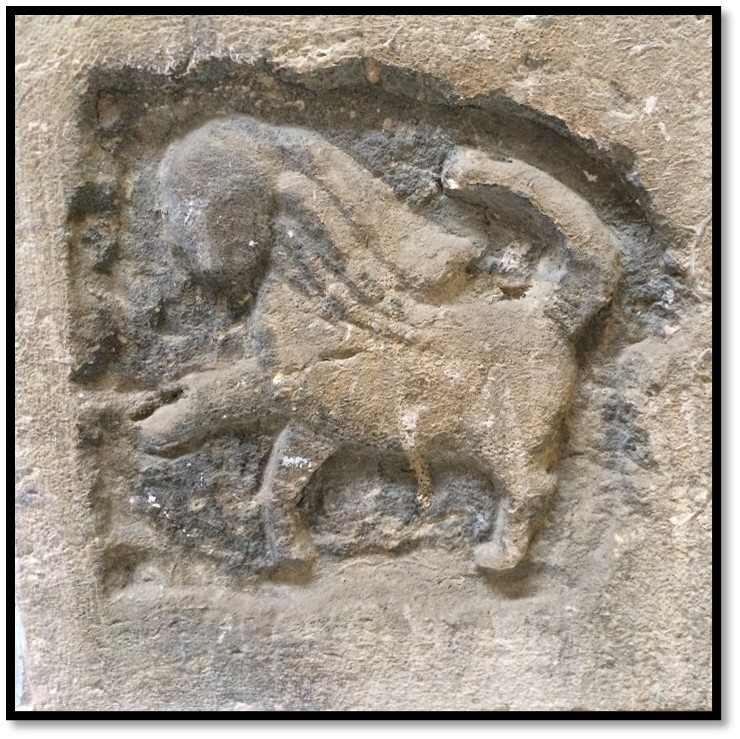
A relief carving of a lion (?) inside property on Milton High Street
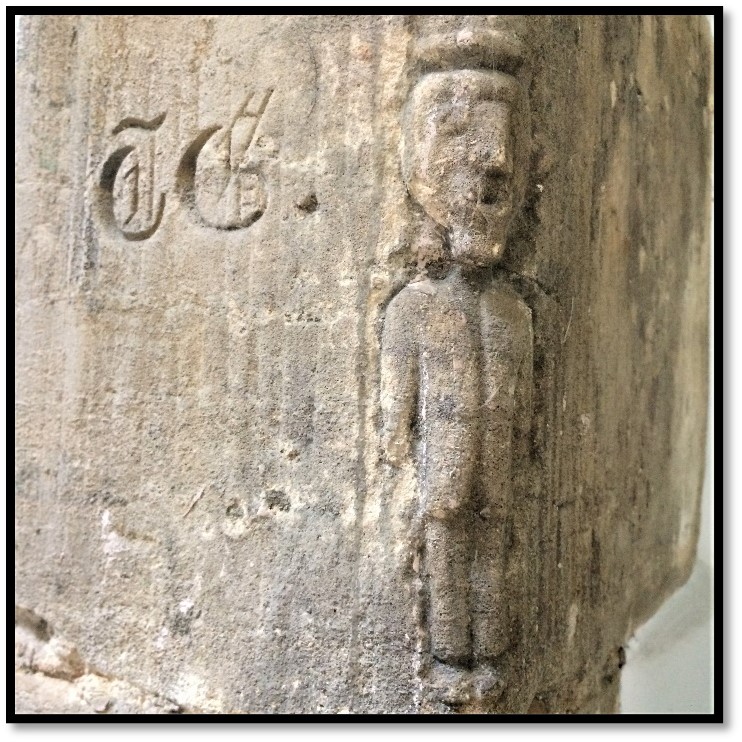
Standing man carved into a quoin now inside a property on Milton High Street
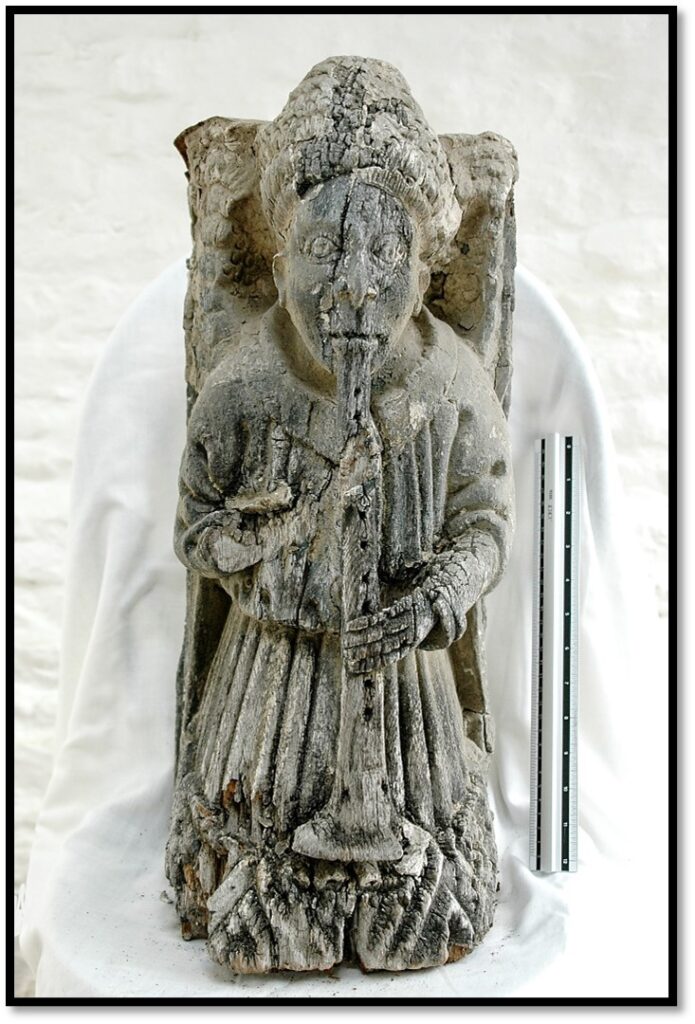
Angel Musician front view, former Wesleyan Mission Room
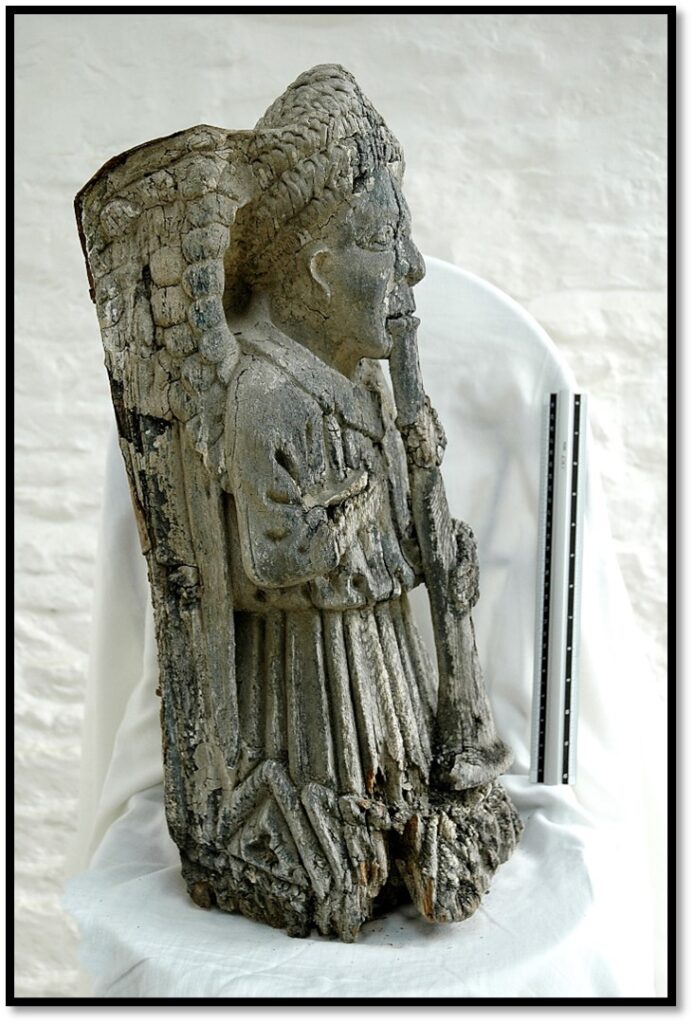
Angel Musician side view, former Wesleyan Mission Room
Carved head depicting Patrick Troughton as Dr Who, Groves Hardware Store 2014
Cookies on our site
We use cookies on our website to give you the most relevant experience by remembering your preferences and repeat visits. By clicking “Accept”, you consent to the use of ALL the cookies.
This website uses cookies to improve your experience while you navigate through the website. Out of these cookies, the cookies that are categorized as necessary are stored on your browser as they are essential for the working of basic functionalities of the website. We also use third-party cookies that help us analyze and understand how you use this website. These cookies will be stored in your browser only with your consent. You also have the option to opt-out of these cookies. But opting out of some of these cookies may have an effect on your browsing experience.
Necessary cookies are absolutely essential for the website to function properly. This category only includes cookies that ensures basic functionalities and security features of the website. These cookies do not store any personal information.
Functional cookies help to perform certain functionalities like sharing the content of the website on social media platforms, collect feedbacks, and other third-party features.
Performance cookies are used to understand and analyze the key performance indexes of the website which helps in delivering a better user experience for the visitors.
Analytical cookies are used to understand how visitors interact with the website. These cookies help provide information on metrics the number of visitors, bounce rate, traffic source, etc.
Advertisement cookies are used to provide visitors with relevant ads and marketing campaigns. These cookies track visitors across websites and collect information to provide customized ads.