These days the Society is receiving an increasing number of overseas visitors to our website. Among these we recently heard from an Australian artist, who described herself as ‘a painter who uses old photographs’.
She had seen an article on our website which referenced Cecil White, an ancestor of hers. In 1916 Cecil came to England for military training, as part of the Australian Expeditionary Force. He took the opportunity to visit the village where his father had been born and meet his White cousins still living in Ascott.
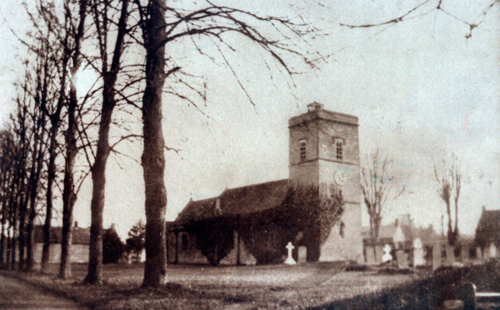
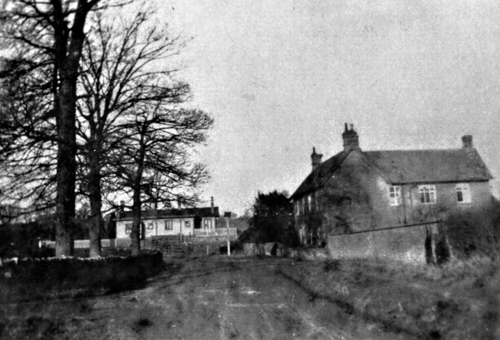
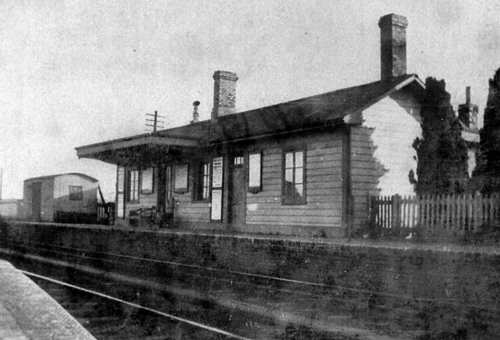
During his visit, Cecil had taken several photos of the village. Could we help her to source some of these photos?
We were delighted to help. And meantime it took us on our own journey of discovery, with Carol Anderson following the story.
Cecil White’s Photograph Album
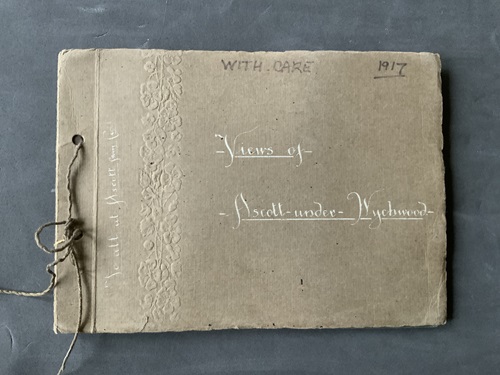
On his return home from his 1916 visit, Cecil compiled an album of 14 of the photographs he took on his visit. He also included 4 images of other places in England – Tilbury Docks, Greenhill House/ Sutton Veny House and parish church, Wiltshire.
Two further photographs feature a group of Australian NCOs on board ship and a portrait of Cecil in uniform.
As a result of this enquiry Carol has been able to organise a full record of the album and its contents, the scans of which are now safely archived.
Here are some examples from our online photo archive.
Cecil White – A Family History
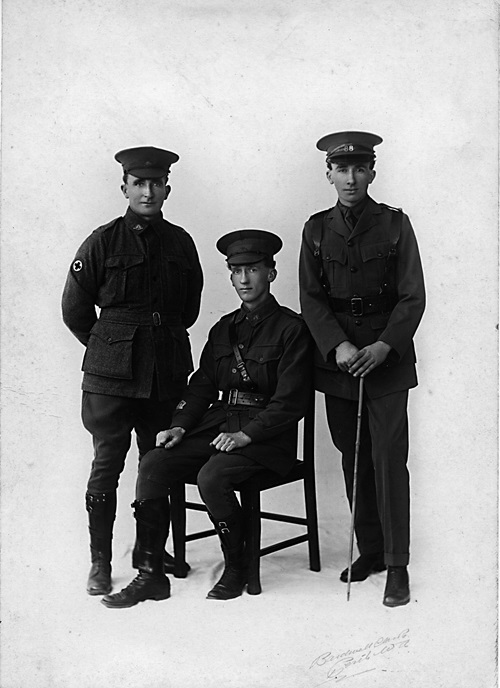
Photograph was taken in the Bardwell Clarke studio in Perth Western Australia.
Cecil White – A Family History in Detail
During the 1850s a William James White came to Ascott-under-Wychwood to take over the forge overlooking the village green. William was one of twelve children, six of whom died in childhood, born to blacksmith William White and his wife Elizabeth, who lived in Christmas Common near Watlington.
When William James came to Ascott he was married to a Mary Ann Eustace. In the 1861 census William James was 31, and Mary Ann was 27 and they are recorded as having four children, William James Jnr., Harriet, George, and Susan.
Blacksmith William’s brother, Alfred, joined the Metropolitan Police and rose to the rank of Sergeant. He married Mary Elizabeth Harvey, who came from St. Pancras, and they had a daughter, Hannah. Alfred resigned from the Police and died soon after in May 1865.
William White’s wife Mary died in 1865 aged 33, having given birth to another son Frederick. Some time afterwards his brother Alfred’s widow, Mary Elizabeth, and her daughter Hannah came to live in Ascott, perhaps to look after William and his children.
On 10 August 1867 William James and Mary Elizabeth were married in the Wesleyan Methodist Chapel, Chipping Norton. At this time, it was illegal for a man to marry his brother’s widow, and this may explain why they were married away from Ascott, in a non-conformist ceremony in Chipping Norton.
After they were married, and before he died in Ascott in April 1874, William James and Mary Elizabeth White had three children, Francis William, Mary Agnes, and Charles Harvey, who were therefore half-siblings to the three boys from William’s first marriage who were later to emigrate to Australia.
When his father died William James jnr., the eldest son of blacksmith William by his second marriage, was about 18 and became the first of his family to emigrate to Perth, Western Australia. In the 1871 Census he is recorded as aged 15 living with the rest of the family in Ascott and his occupation is that of a shepherd (he had not followed his father and grandfather into blacksmithing), a role that may have fitted him for work in Australia.
Subsequently, and separately with other young men from the village, two more of the White family also emigrated to Western Australia where a group of Ascott ex-pats seem to have gathered around Perth. Frederick White (aged 16/17) had emigrated by 1880. Currently, nothing further is known about Frederick. George White, the third of William and Mary’s sons to emigrate, arrived in Perth on the Charlotte Padbury in September 1881 and married Jane McGowan in 1884 but died the following year aged 26.
William James Jnr., the first of the family to emigrate, married Annie Coffin at Yatheroo in 1879. They had four sons and two daughters. Three of their sons joined the Australian Expeditionary Force (AEF) in World War I. The eldest, George, joined the Australian Army Medical Corps and served in Egypt. Bason, the youngest, was still too young to serve abroad when the War ended.
William and Annie’s second son, Cecil, married Ivy Derepas in Perth in 1915 and later, as a Sergeant in the AEF, was sent to England. On leave there, whilst completing his training, he travelled to Ascott to see his father’s birthplace. Here he met the family of his father’s half-brother, Charles Harvey White who had married Kate Honeybone and had three surviving children, Charles, Florence and Doris.
In January 1919 he sent his cousins, the White family of The Old Post Office (aka Centuries House), London Lane, an album containing copies of the photographs he had taken on his visit.
The album is now in the possession of Harvey Warner (Charlbury) son of Doris Warner (nee White, daughter of Charles White).
Research by Carol Anderson
Sources:
1861 & 1871 Census: Ascott-under-Wychwood
Information provided by Harvey Warner